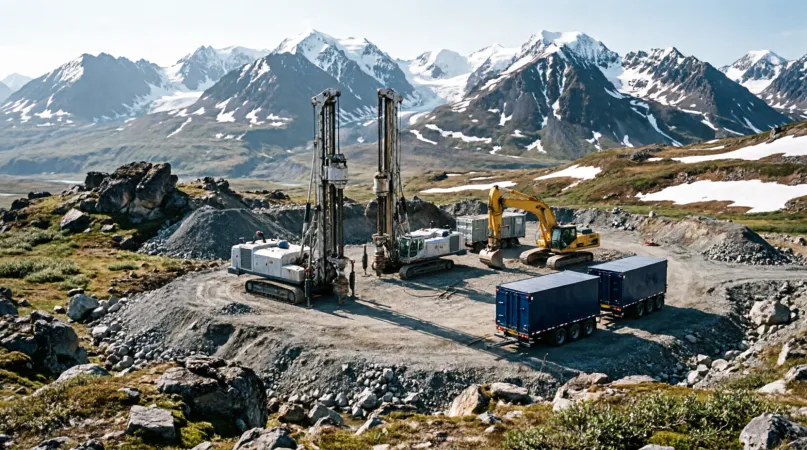
UNITED STATES OF AMERICA —Geothermal technology firm Quaise Energy has finalized its Series B financing round with a total of $180 million raised, bringing the startup's cumulative funding to $280 million. The equity round concluded following a $35 million strategic injection from land drilling contractor Nabors Industries. Alongside the investment, both entities established an operational agreement giving Quaise access to specialized drilling rigs, technical infrastructure, and reservoir modeling assets. Earlier funding within the Series B round was anchored by Prelude Ventures, with participation from Japanese energy firms JERA and Idemitsu Kosan.
Quaise Energy develops ultra-deep geothermal harvesting systems using high-frequency millimeter-wave technology originatating from research at the Massachusetts Institute of Technology. Nabors Industries operates as an international land drilling contractor providing engineering, automation, and data services to energy producers.
The capital deployment prioritizes the development of Project Obsidian, an experimental superhot geothermal facility situated in Central Oregon. Funds will also advance millimeter-wave drilling equipment aimed at penetrating rock depths beyond 5 kilometers, where extreme subterranean temperatures reside. Standard rotary drilling methods encounter severe operational degradation under extreme subterranean conditions, restricting traditional geothermal energy to geographically rare volcanic zones. By utilizing high-power microwave beams to vaporize hard rock, deep geothermal systems aim to access high-density thermal energy globally.
Reaching deep thermal reservoirs allows geothermal operators to generate continuous, carbon-free baseload electricity with a surface footprint comparable to conventional thermal power plants. Successfully scaling millimeter-wave technology could expand clean energy production capabilities, allowing utility providers to repurpose existing fossil fuel power grid infrastructure. Additionally, integrating established oil and gas equipment suppliers into geothermal projects provides a path for conventional energy contractors to diversify their operations amid broader industrial decarbonization efforts.