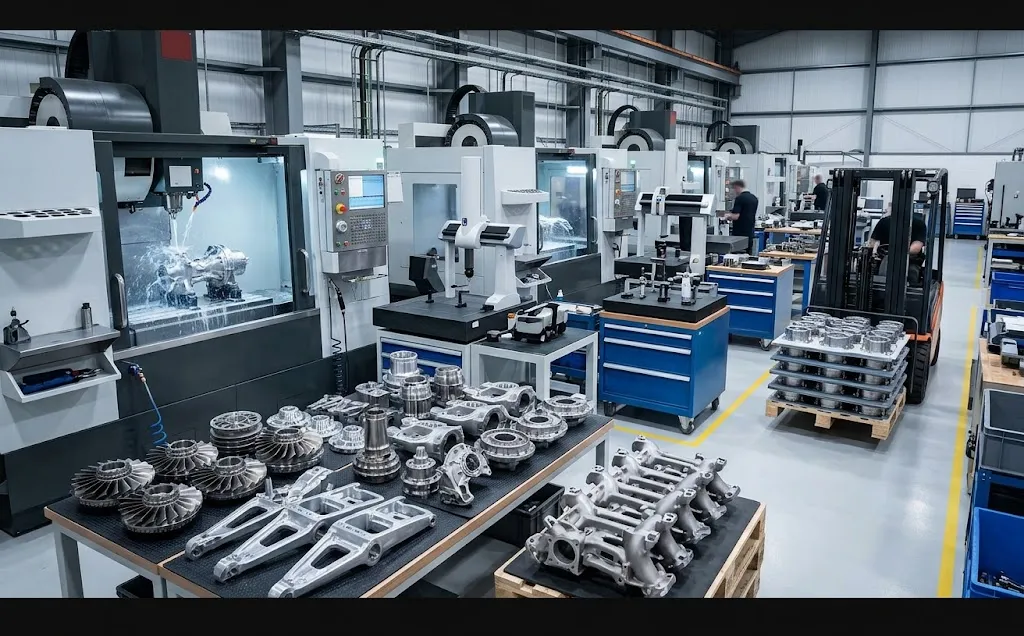
INDIA —India’s domestic aerospace supply chain has received a significant boost as Raymond Limited’s aerospace subsidiary secured a comprehensive multi-programme contract from a prominent Indian aerospace and defence contractor. Under the new agreement, the subsidiary will manufacture and deliver more than 300 distinct part numbers encompassing precision machining, structural components, aerospace castings, and complex sub-assemblies. The manufacturing volume is projected to top 37,000 components per year, translating into an estimated annual revenue potential of INR 330 million. Progressive production and deliveries are scheduled to begin between 2026 and 2027.
Founded in 1925 as a textile enterprise, Raymond Limited has evolved into an industrial conglomerate with dedicated engineering divisions focused on precision technology, automotive components, and aerospace manufacturing. This recent contract win marks a vital milestone in the company’s broader corporate repositioning, expanding its presence beyond traditional manufacturing toward advanced, high-precision engineering domains. The inclusion of multi-stage fabrication capabilities allows the business to capture higher value per program and deepen its integration across complex supply networks.
This development underscores a notable shift in market dynamics within the regional defence ecosystem. Historically dependent on export markets, Indian precision engineering firms are increasingly capitalizing on domestic indigenization mandates. By extending its operations across multiple tiers of structural assembly and component manufacturing, the company enhances its multi-year operational pipeline while aligning with national policies that encourage localized defence production and strategic self-reliance.
For industrial decision-makers and investors, the expanding footprint of commercial engineering groups in aerospace manufacturing signals strengthening domestic procurement capacity. The deal reflects ongoing structural optimization within high-margin sectors, demonstrating how established industrial players can leverage technical diversification to secure recurring, long-term order backlogs amidst sustained capital investments in defence infrastructure.