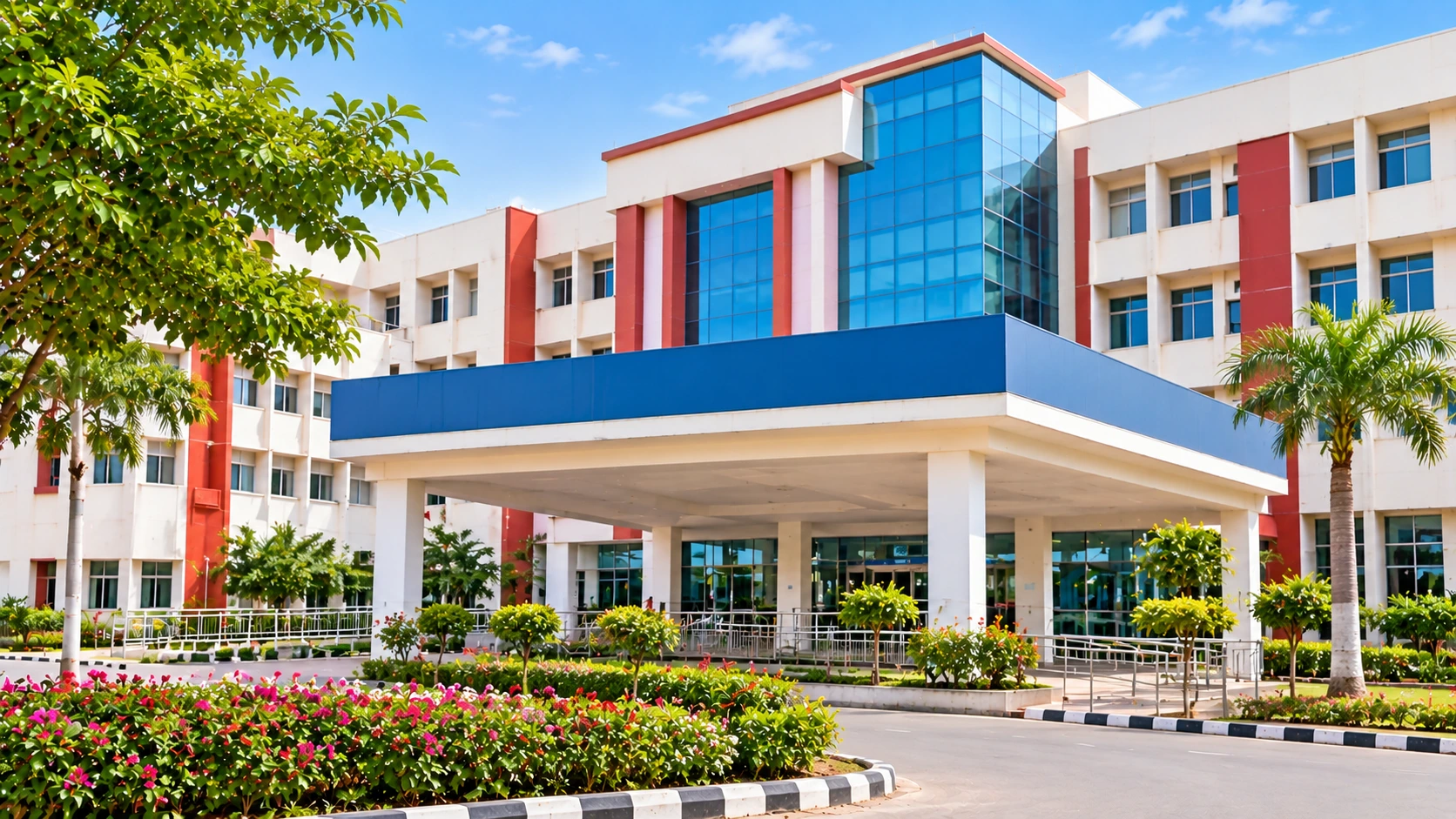
INDIA —A major infrastructure expansion is underway for public oncology services in southern Tamil Nadu, centered on the regional cancer care facility at Government Rajaji Hospital in Madurai. Healthcare authorities have submitted a revised detailed project report that upgrades the original development plan into a comprehensive ₹1.98 billion regional facility. The expanded blueprint addresses severe service bottlenecks by adding specialized sub-specialties-including pediatric hemato-oncology, nuclear medicine, and bone marrow transplantation to existing medical, surgical, and radiation oncology departments.
Government Rajaji Hospital, established in Madurai, serves as the primary tertiary referral healthcare institution for multiple southern districts of Tamil Nadu, delivering specialized medical treatment and clinical training across the region.
The structural scope of the facility has been significantly enlarged to accommodate the broader clinical mix. Under the updated design, the proposed structure expands from a ground-plus-eight-story facility to a ground-plus-11-story building. The physical footprint has also increased to 2.10 acres following the resolution of land reclassification and administrative transfer procedures involving adjacent public land parcels.
This infrastructural scaling reflects a strategic effort to decentralize advanced tertiary healthcare, which has historically been concentrated in northern state hubs such as Chennai. By establishing complex modalities like marrow transplants and advanced diagnostic nuclear imaging locally, the project reduces travel burdens and out-of-pocket logistical expenditures for patients across southern districts.
From an industry and policy perspective, the expansion highlights growing public investment in specialized clinical infrastructure and tertiary care capacity in Tier-II urban centers. The project signals heightened demand for high-end medical equipment, specialized laboratory technology, and pharmaceutical supply chains tailored to complex oncology and nuclear medicine requirements.
For healthcare equipment vendors, civil engineering firms, and institutional suppliers, the enlarged scope opens capital expenditure opportunities in specialized hospital construction, radiation shielding, and advanced diagnostic infrastructure. The project also underlines potential operational partnerships for workforce upskilling and clinical training to support high-density sub-specialty units in regional markets.