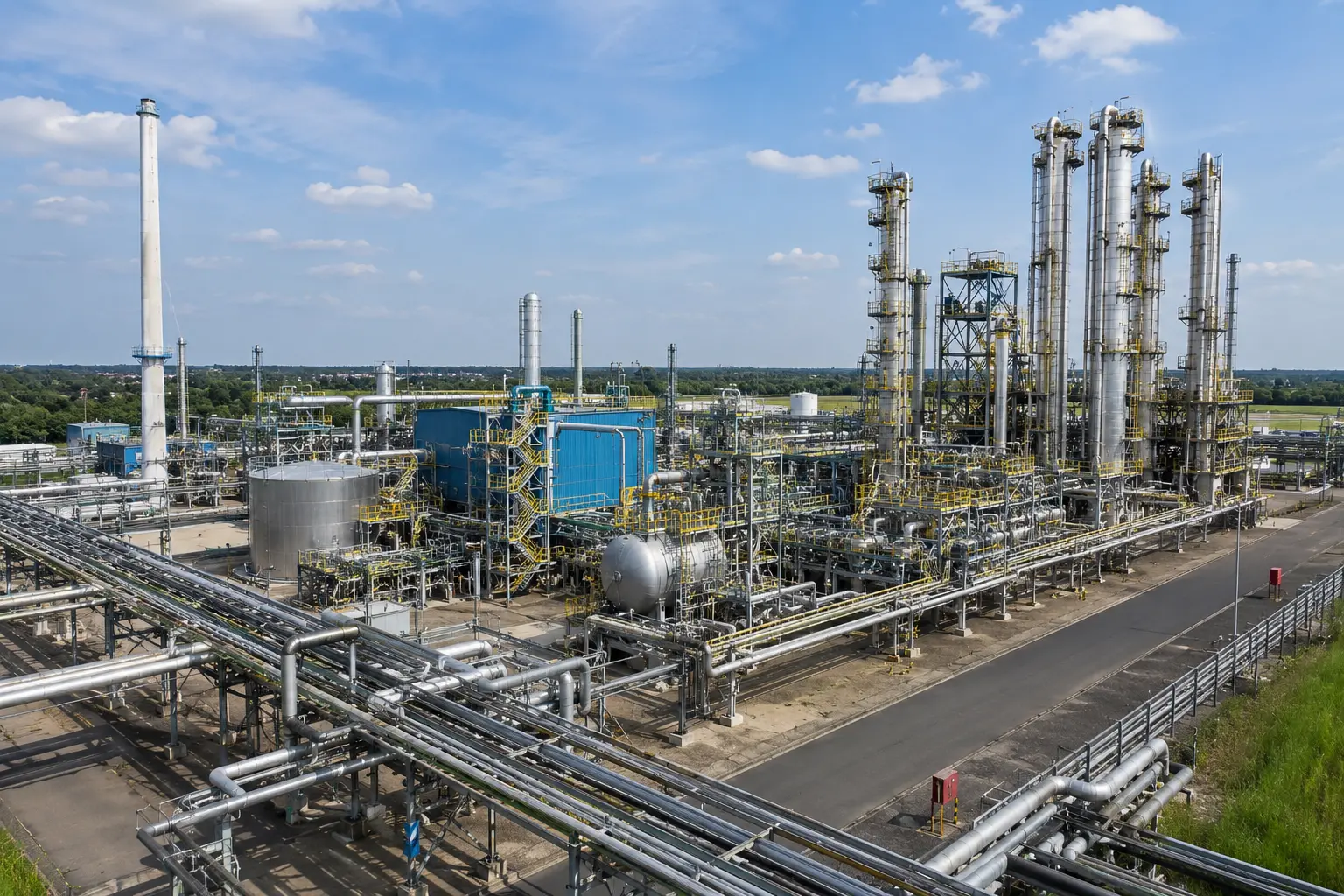
GERMANY —Italian engineering services firm Saipem has been awarded a pre-Front-End Engineering Design (pre-FEED) contract by Swiss synthetic fuel developer Synhelion AG to design a commercial-scale renewable fuel production facility in Hürth, Germany. Located at the Chemiepark Knapsack industrial site operated by German energy group RWE, the plant is designed to manufacture approximately 30,000 tonnes per year of Renewable Energy Directive-compliant synthetic fuels, primarily focused on Sustainable Aviation Fuel alongside synthetic diesel and gasoline. Saipem will develop a multidisciplinary engineering package integrating Synhelion’s proprietary fuel production technology with downstream synthesis processes and RWE’s existing site infrastructure, establishing the technical baseline for environmental permitting and future final investment decisions. Saipem is an Italian multinational engineering contractor specializing in industrial facilities, energy transition infrastructure, and offshore processing systems. Synhelion AG is a Swiss clean technology enterprise focused on commercializing solar-to-liquid processes to produce carbon-neutral fuels. RWE is a Germany-headquartered multinational utility operating power generation assets and industrial chemical parks across Europe.
The contract represents a critical step in scaling drop-in synthetic hydrocarbons from demonstration scale to commercial output levels. Developing commercial-scale synthetic fuels—commonly referenced as e-fuels or power-to-liquid fuels-is essential for decarbonizing heavy transport sectors like commercial aviation and maritime shipping where battery electrification is currently infeasible. Establishing a standardized 30,000-tonne annual production footprint enables project sponsors to evaluate capital expenditure requirements, process integration risks, and utility requirements prior to committing major capital investments.
From an industry and regulatory perspective, the project directly supports European Union climate policies targeting transport emissions. Under the EU's ReFuelEU Aviation mandate and broader Renewable Energy Directive framework, commercial airlines operating in Europe face progressively higher mandatory blending targets for non-fossil synthetic fuels over the coming decade. Locating synthetic fuel production at established chemical complexes like Chemiepark Knapsack optimizes regional distribution channels for aviation and maritime operators while demonstrating how legacy industrial sites can be repurposed for green fuel synthesis.
For investors, engineering contractors, and corporate energy buyers, the deployment highlights expanding commercial momentum within the alternative fuel sector. Early engineering involvement positions contractors like Saipem to secure subsequent high-value procurement and construction packages as commercial project pipelines expand. Furthermore, establishing localized fuel off-take agreements offers airlines, logistics providers, and industrial transport fleets transparent access to compliant low-carbon fuels needed to fulfill corporate sustainability commitments.