SAMOA —Capital allocation for climate defense in the South Pacific is shifting toward nature-based infrastructure following the formal authorization of a US$5.3 million, five-year watershed management initiative in Samoa. Executed domestically by the Ministry of Natural Resources and Environment with multilateral oversight from the United Nations Development Programme (UNDP), the capital deployment is fully financed by the Global Environment Facility (GEF) and commenced operations in November 2026.
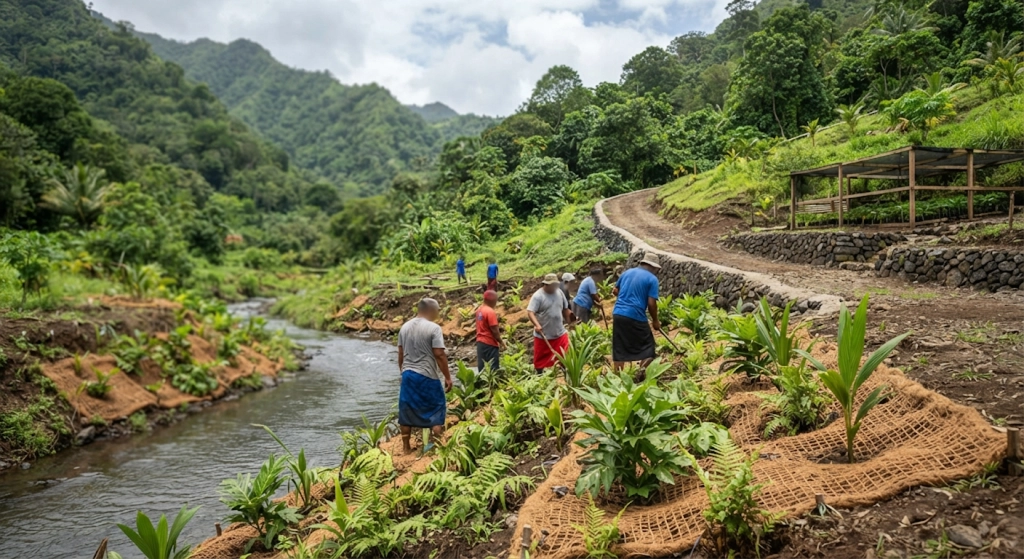
For international donors and regional policymakers, the agreement establishes a scalable operational model for small island developing states facing acute coastal and terrestrial vulnerability. Rather than relying exclusively on capital-intensive engineered seawalls or gray infrastructure, the program mandates Ecosystem-based Adaptation protocols to stabilize watersheds, arrest land degradation, and preserve biodiversity. This dual-purpose approach maximizes fiscal efficiency by addressing climate disaster risks while simultaneously meeting international land degradation neutrality benchmarks.
At the policy level, the disbursement directly operationalizes Key Strategic Outcome 4 and Key Priority Area 9 within the Pathway for the Development of Samoa, the nation's overarching medium-term development framework. The Ministry of Natural Resources and Environment, which serves as the primary state regulator and executor of environmental policy in Apia, will oversee national implementation. Oversight and technical compliance remain with the United Nations Development Programme (UNDP), the multilateral agency responsible for poverty reduction and sustainable development across 170 nations, acting in its capacity as the accredited Global Environment Facility implementing entity. Founded to address global environmental challenges, the Global Environment Facility (GEF) operates as a multilateral trust fund providing grants and blended finance to developing economies.
For private sector contractors, environmental consultancies, and regional agricultural stakeholders, the five-year rollout signals upcoming demand for specialized ecological restoration services, geographic information systems, and environmental monitoring technologies. A core pillar of the budget is dedicated to building a centralized knowledge management architecture alongside rigorous monitoring and evaluation frameworks. Consequently, engineering firms, forestry specialists, and data analytics providers operating in Oceania can anticipate targeted public procurement opportunities tied to watershed rehabilitation, community-level land management, and long-term ecological impact auditing.