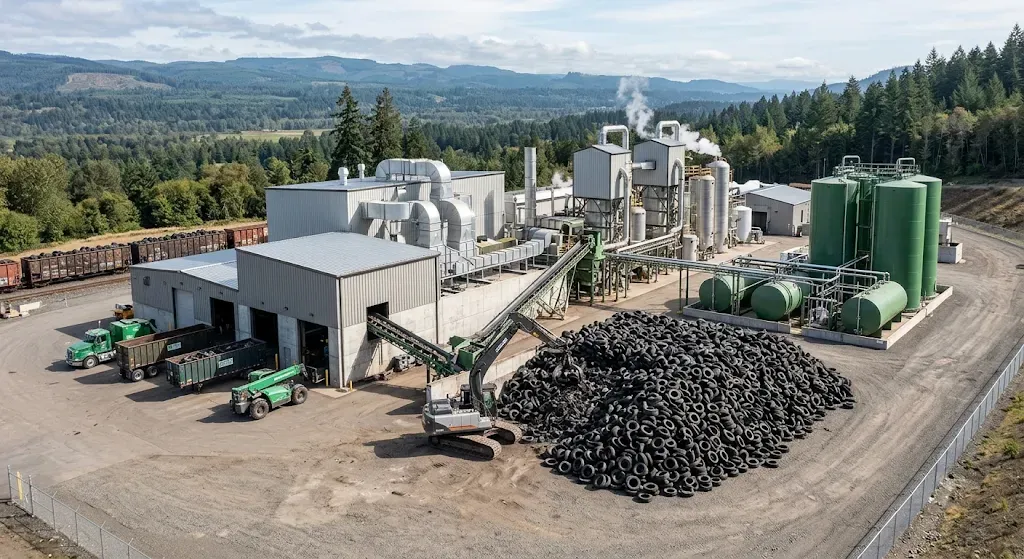
SWEDEN; UNITED STATES OF AMERICA —Scandinavian Enviro Systems has entered into a conditional service agreement valued at USD 2 million with an international transport operator serving the energy sector. Under the terms of the accord, the firm will generate technical documentation necessary for regulatory and environmental permit applications while establishing an initial facility design. The agreement follows a previously established letter of intent between the parties and marks a structural step toward developing a North American recycling facility designed to process 50,000 tonnes of used tyres annually. Execution of the services remains strictly contingent upon the operator finalizing project feasibility, securing a site, and locking in binding product purchase agreements covering at least 75 percent of anticipated output for both recovered oil and carbon black.
Headquartered in Gothenburg and established in 2001, Scandinavian Enviro Systems specializes in patented material recovery technology that extracts raw materials from scrapped tyres. The development reflects a broader industrial push toward circular supply chains, offering manufacturers a viable route to lower corporate emissions by substituting virgin materials with recovered alternatives. For industrial operators and energy logistics providers, incorporating recovered carbon black and pyrolysis oil provides a strategic avenue to meet stringent sustainability mandates and reduce reliance on fossil-intensive feedstocks.
The project carries distinct implications for the waste management, chemical, and automotive sectors, particularly concerning sustainable sourcing of raw inputs. By advancing localized recycling infrastructure in North America, the initiative aligns with tightening regional environmental regulations and corporate decarbonization goals. Market participants and industrial stakeholders closely monitor such transitional projects to gauge the economic viability of commercial-scale tyre pyrolysis and its capacity to reshape downstream manufacturing material streams.
For investors and corporate strategists, the arrangement demonstrates a revenue-generating pre-construction model that mitigates upfront capital risk for technology licensors during early development phases. Financial commitment is structured around milestone-based payments and clear off-take prerequisites, safeguarding all parties against premature capital allocation. As global supply chains prioritize resilience and circularity, validation of alternative recycling technologies through structured service contracts offers a blueprint for cross-border environmental infrastructure financing.