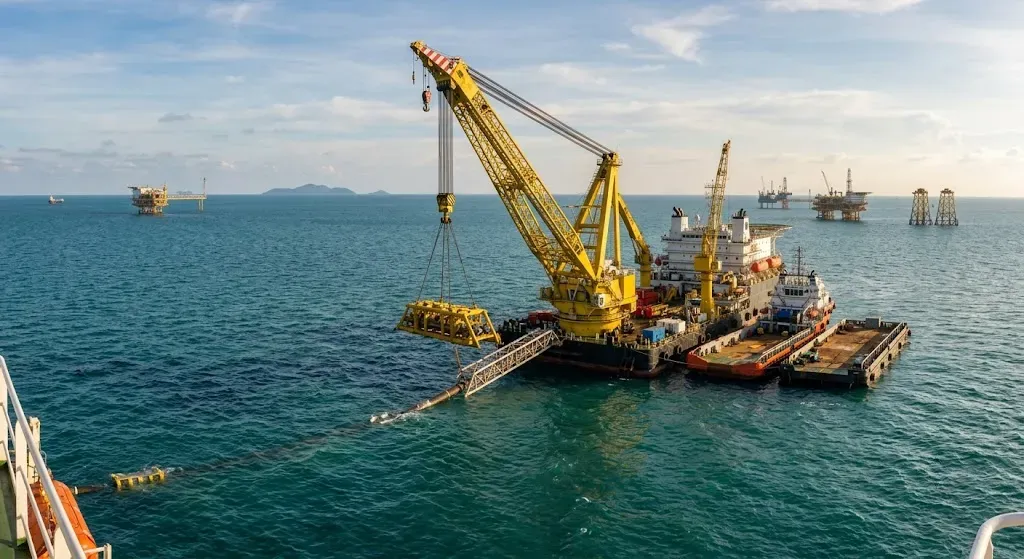
INDIA —Seamec, a recognized provider of diving support vessels and subsea engineering services, has formalized a strategic marine charter agreement with infrastructure engineering firm GR Infraprojects. Valued at approximately USD 19.02 million, the subcontract provisions the deployment of the offshore support asset designated as SEAMEC II. The specialized offshore vessel is slated to commence operations during the latter half of October and will be engaged for a firm operational tenure of half a year, with structured provisions for future operational extensions based on mutual consensus.
The maritime charter focuses on executing complex subsea installation operations critical to the offshore Pipeline Replacement Project and the Discovered Small Fields initiative, both spearheaded by the Oil and Natural Gas Corporation (ONGC). ONGC functions as a central state-owned enterprise heavily involved in petroleum exploration and production, driving domestic hydrocarbon security. By undertaking these submerged pipeline replacements and field developments, the collaborative contractors are facilitating the vital modernization of aging offshore assets while seamlessly bringing new marginal hydrocarbon reserves into active commercial production.
This operational development underscores a robust and ongoing capital expenditure cycle within the regional offshore petroleum industry. As national energy explorers intensify their focus on maximizing yields from existing offshore blocks and extracting strategic resources from marginal fields, the demand for specialized marine support and underwater engineering vessels continues to experience an upward trajectory. This specific charter reflects how primary engineering, procurement, and construction contractors are increasingly relying on specialized maritime operators to effectively handle the technically demanding underwater components of their broader project portfolios.
For marine offshore service providers, securing such medium-term charter contracts ensures critical revenue visibility and maximizes fleet utilization metrics during active offshore working seasons. Industry investors and market observers systematically track these specific charter rates and deployment durations as reliable leading indicators of broader capital commitments in the offshore oilfield services market. Furthermore, the functional collaboration between general infrastructure firms and specialized offshore maritime operators establishes a strategic delivery framework inherently necessary for executing multifaceted national energy infrastructure upgrades efficiently.