SINGAPORE —Singapore-headquartered optics developer MetaOptics has entered into a warrant agreement with Los Angeles-based White Lion Capital to raise up to US$10 million in growth funding. Under the arrangement, the investment firm can exercise warrants to acquire up to 40 million new ordinary shares of MetaOptics, marking the semiconductor firm's first institutional capital inflow from a U.S. investor since listing on the Singapore Exchange's Catalist board.
MetaOptics designs and produces glass-based metalenses and optical modules for applications spanning smartphones, augmented reality, automotive sensing, and co-packaged optics used in artificial intelligence data infrastructure. White Lion Capital is a U.S. private investment entity focused on supplying expansion capital to publicly traded technology firms.
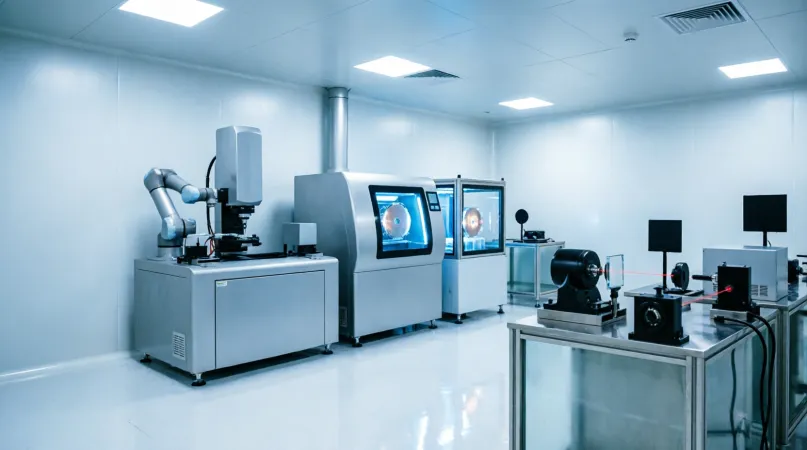
The capital injection is designated to fund MetaOptics' physical operational footprint in the United States, centered on establishing a dedicated front-end semiconductor fabrication line. The planned facility will house 12-inch deep ultraviolet immersion photolithography systems to manufacture metalenses locally. By transferring key design, production, and testing capabilities directly into North America, the company aims to meet strict domestic sourcing and mass-production validation criteria required by major American tech clients.
This strategic move places MetaOptics inside its primary end market, directly supporting ongoing collaborative projects across consumer electronics, autonomous sensing, and optical interconnects. Modern data centers optimizing for high-density artificial intelligence computing are rapidly adopting co-packaged optics to lower power consumption and increase data throughput, making high-volume glass metalens production a critical component of the underlying hardware supply chain.
Establishing domestic manufacturing capabilities allows Asian technology vendors to reduce cross-border supply chain risks and shorten cycle times for Tier-1 technology customers in the United States. For institutional investors, the arrangement reflects growing appetite for niche microelectronics suppliers that can scale specialized semiconductor packaging processes across both consumer and enterprise hardware ecosystems.