UNITED STATES OF AMERICA —Skanska has entered into a USD 110 million contract with the Renton School District for construction of a new Renton High School in Renton, Washington. The value, equivalent to about SEK 1.0 billion, will be recorded in Skanska’s US order bookings for the third quarter of 2026.
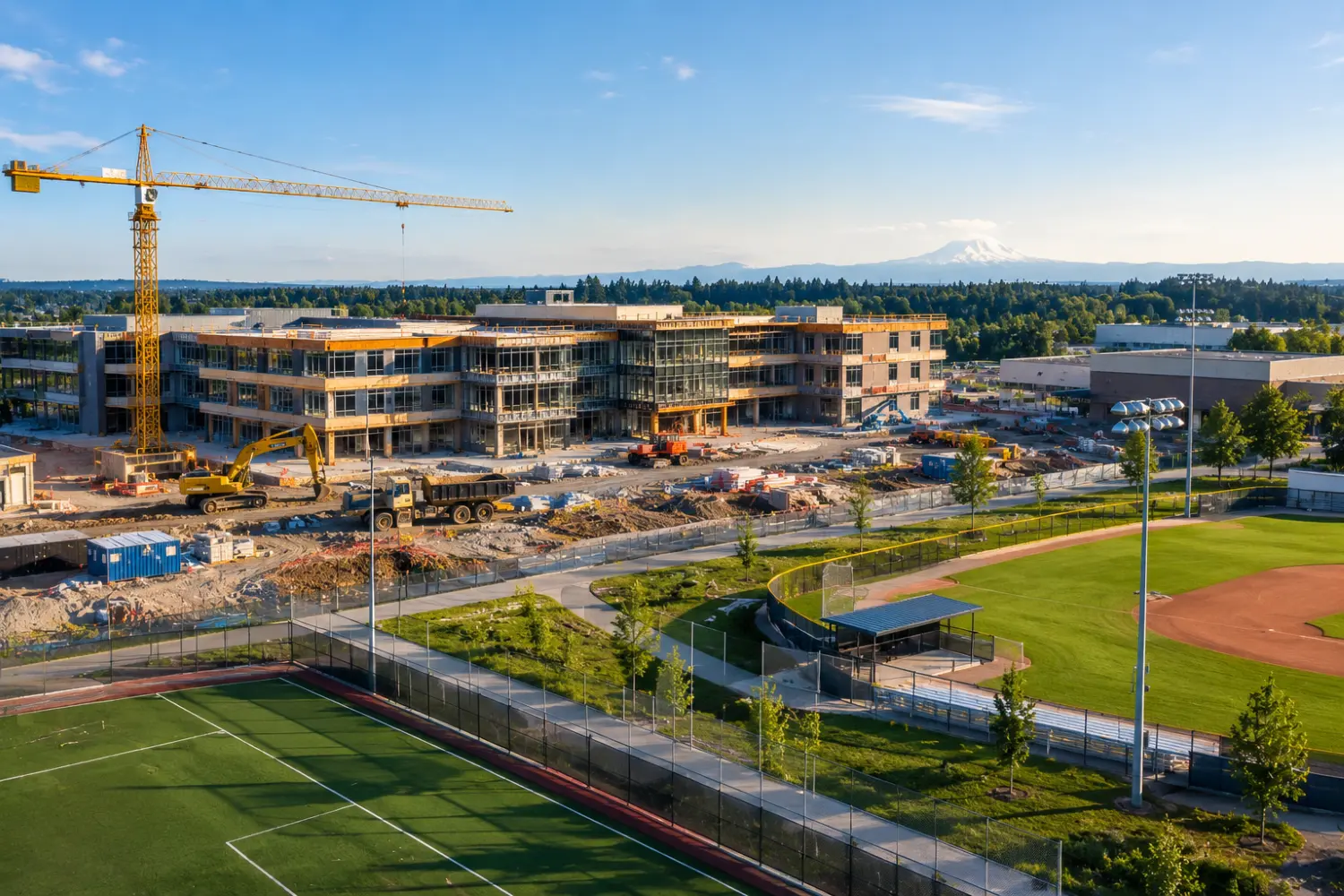
The planned facility will span approximately 32,500 square meters, or 350,000 square feet, across three storeys and will provide capacity for 1,600 students. The campus is designed to combine conventional teaching areas with specialist environments for Career and Technical Education, science, art and elective subjects. It will also contain spaces for health and special services, community activities, a library, cafeteria, commons and gymnasiums.
Outdoor infrastructure is included in the development, with a lighted baseball and softball field as well as a practice football and soccer field. Construction has already started, with completion scheduled for fall 2029. The project represents a substantial investment in education infrastructure in the Seattle-area city of Renton, where the new campus will provide expanded school capacity and a broader range of facilities for students and the local community.
For the US construction market, the contract adds to demand for large-scale public education facilities and demonstrates continued investment in replacement and modernization of school infrastructure. Projects of this scale also create opportunities across building construction, engineering, specialist systems and supporting infrastructure suppliers.
Skanska is a major construction and project development group operating across multiple markets, including the United States. The Renton School District is responsible for public education services in Renton and is the client for the new high school development.
For businesses involved in education construction, the project provides a multi-year pipeline through 2029, while the contract strengthens Skanska’s US order book with a sizeable institutional construction project. The combination of academic, community and sports facilities also indicates that the development extends beyond classroom capacity to support broader public infrastructure needs.