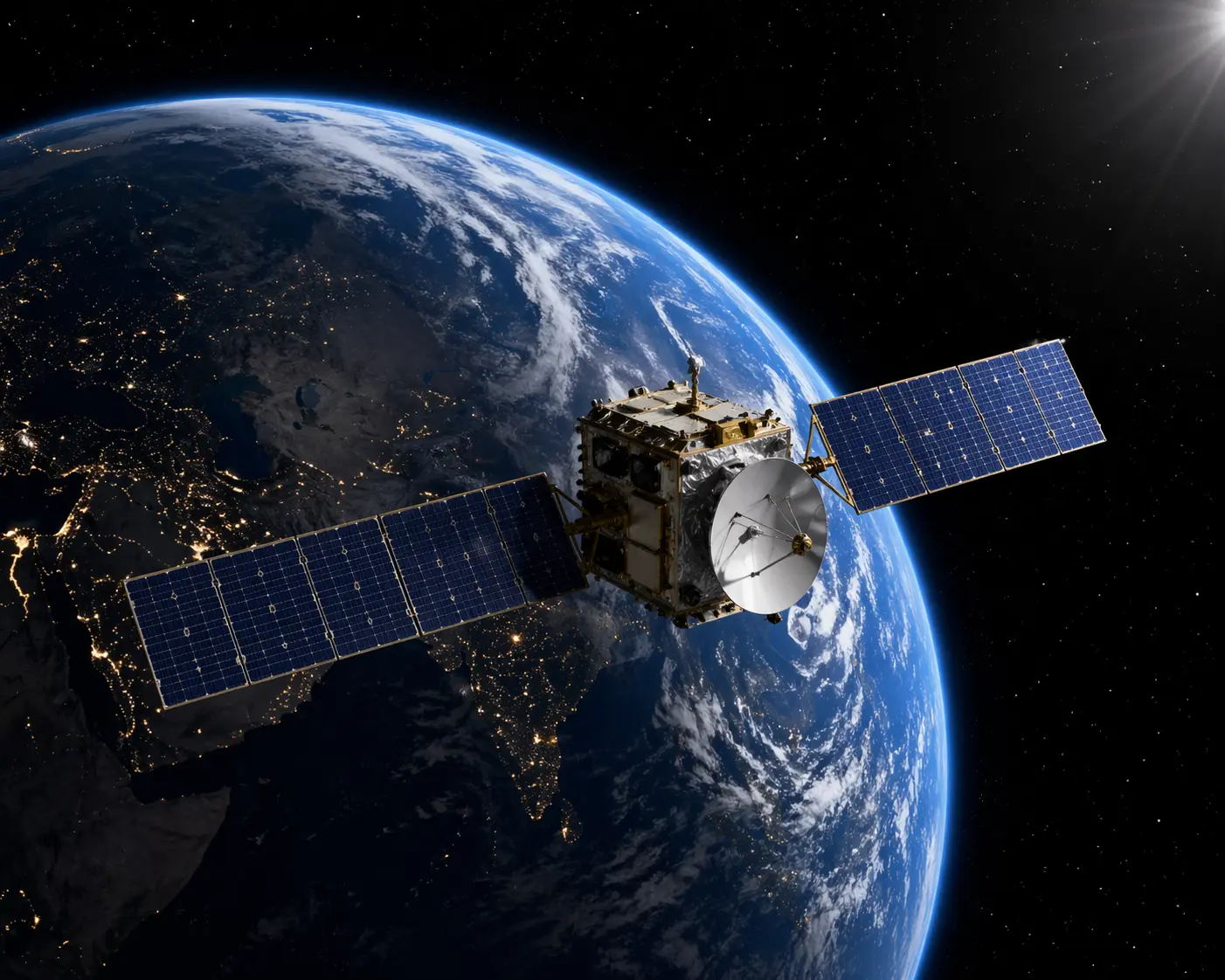
UNITED STATES OF AMERICA —Commercial launch operator SpaceX has been awarded a task order by NASA to provide launch services for the StarBurst astrophysics mission. Scheduled to lift off no earlier than 2028, the small satellite will deploy aboard a Falcon 9 rideshare mission operating from Space Launch Complex 40 at Cape Canaveral Space Force Station in Florida. The procurement was executed as a firm-fixed-price task order under NASA’s multi-award Venture-Class Acquisition of Dedicated and Rideshare contract framework, an indefinite-delivery/indefinite-quantity mechanism featuring a ten-year ordering window and a cumulative ceiling of $1 billion across participating launch vendors.
Space Exploration Technologies Corp. is an American aerospace manufacturer and space transportation services provider headquartered in Hawthorne, California. The National Aeronautics and Space Administration is an independent agency of the U.S. federal government responsible for the civil space program, aeronautics research, and space exploration.
The agreement highlights a growing reliance on commercial rideshare models to execute cost-constrained scientific space missions. StarBurst is financed through NASA’s Astrophysics Pioneers Program, an initiative designed to foster lower-cost orbital investigations using small spacecraft platforms. By leveraging shared launch opportunities, space agencies can drastically reduce payload transport costs while maintaining regular access to low Earth orbit for specialized research hardware.
The integration of small satellite payloads into scheduled commercial launch manifests reinforces the commercial viability of rideshare services. Operational data generated by the StarBurst detector will contribute to multimessenger astronomy, coordinating orbital gamma-ray tracking with terrestrial gravitational-wave observatories to analyze high-energy cosmic events.
From an industry perspective, fixed-price rideshare contracts offer a repeatable revenue structure for commercial launch providers while granting government agencies capital efficiency. This model expands operational pathways for smallsat manufacturers, launch integrators, and scientific supply chains reliant on affordable access to space.