
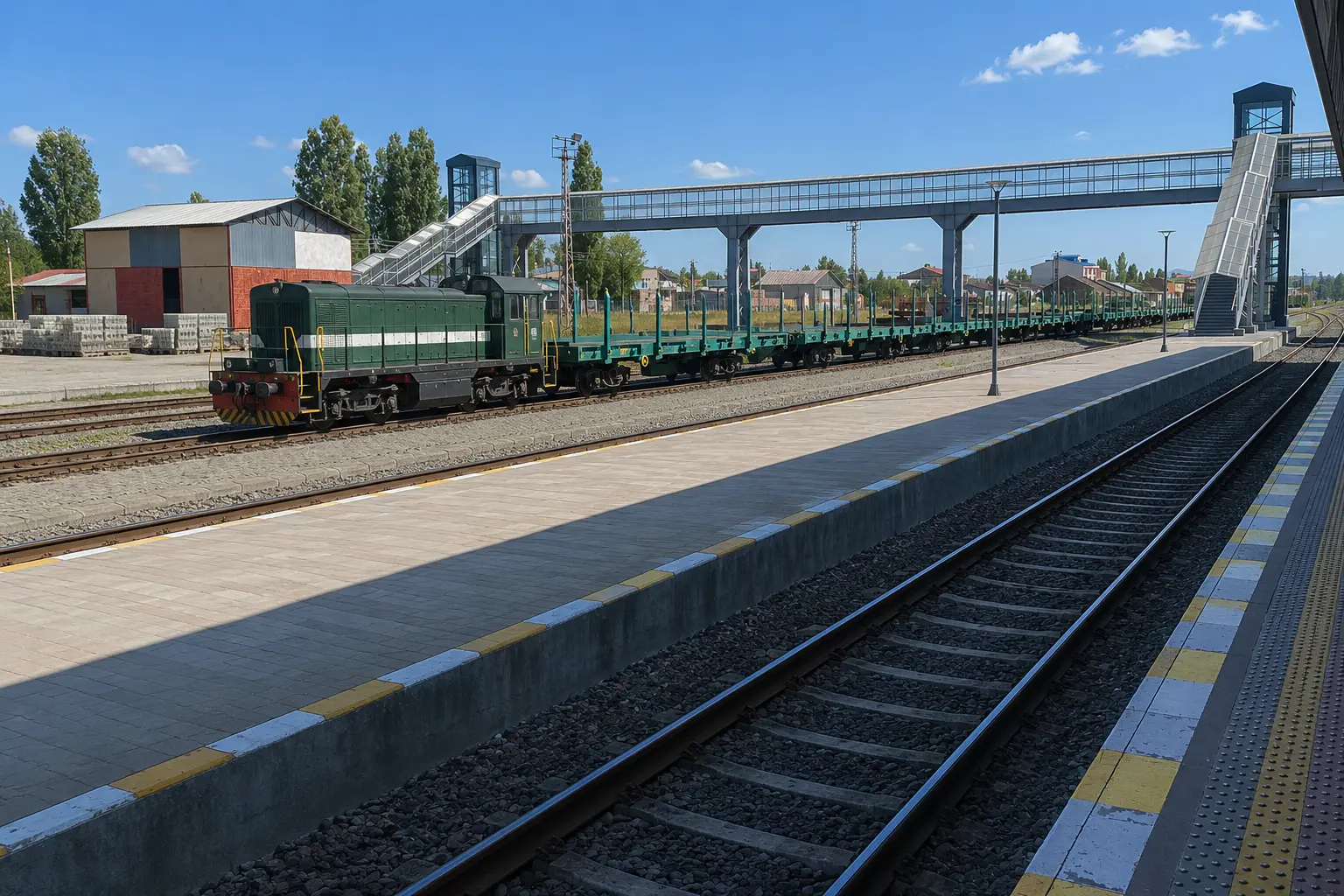
Türkiye and Armenia have commenced infrastructure rehabilitation and announced public tenders to restore the Gyumri-Kars railway and connecting border roads. The multi-modal project aims to re-establish direct rail freight transit between both nations, unlocking critical trade corridors across the South Caucasus, Europe, and the Middle East.
Turkish transport authorities have initiated active civil works and infrastructure rehabilitation along the border segment between Akyaka and Gyumri to restore the Gyumri-Kars railway line linking Armenia and Türkiye, according to public disclosures and municipal statements. Tenders have been issued for track reconstruction and connecting road infrastructure along the border corridor, with initial works targeted for completion within two to three months. The ongoing preparation follows bilateral agreements established during diplomatic normalization talks between special representatives in September 2025 and a Joint Working Group session in Kars in April 2026. Armenian Prime Minister Nikol Pashinyan confirmed that technical evaluations are concurrently underway on the Armenian side. The Ministry of Transport of Türkiye is the government body responsible for national railway networks and cross-border transit projects, while the Ministry of Foreign Affairs of Armenia manages foreign relations and diplomatic normalization policy.
Reopening the rail link—spanning 57 kilometers from Kars to Akyaka and roughly 20 kilometers onward to Gyumri—re-establishes a strategic land transport corridor between two neighboring economies whose border has remained closed for decades. Restoring physical connectivity eliminates a major logistics bottleneck in the South Caucasus, giving landlocked Armenia direct rail access to Middle Eastern and European trade networks via Türkiye. Concurrently, Türkiye gains a direct overland freight connection into the Caucasus, reinforcing regional trade integration. The bilateral initiative also encompasses technical assessments to reactivate cross-border electricity transmission lines, laying the groundwork for shared utility infrastructure.
From an industry and policy perspective, the rehabilitation of border infrastructure signals a tangible step toward regional economic integration in the South Caucasus. For civil engineering contractors, track equipment manufacturers, and construction firms, public tenders for rail restoration, road building, and border crossing facilities offer immediate commercial opportunities. Restoring trade corridors is expected to stimulate regional commerce, benefiting agriculture, light manufacturing, and municipal economies in border provinces that have faced prolonged economic isolation.
For international freight forwarders, logistics operators, and institutional investors, the operationalization of the Gyumri-Kars railway introduces a viable overland transport route connecting Caspian and Black Sea trade basins with Mediterranean maritime hubs. Transitioning heavy freight from road transport to direct rail transit will reduce operational logistics costs and shorten supply chain transit times across Eurasia. As regional trade patterns continue to evolve, the reactivated rail corridor improves supply chain resilience and strengthens the commercial viability of cross-border trade ventures across the region.
About GlobeNewsInfo
GlobeNewsInfo.com is a business news platform providing latest updates on global business developments, projects, and contract opportunities across diverse sectors and regions. The platform is designed to serve as a trusted source of information for companies, investors, and professionals worldwide.