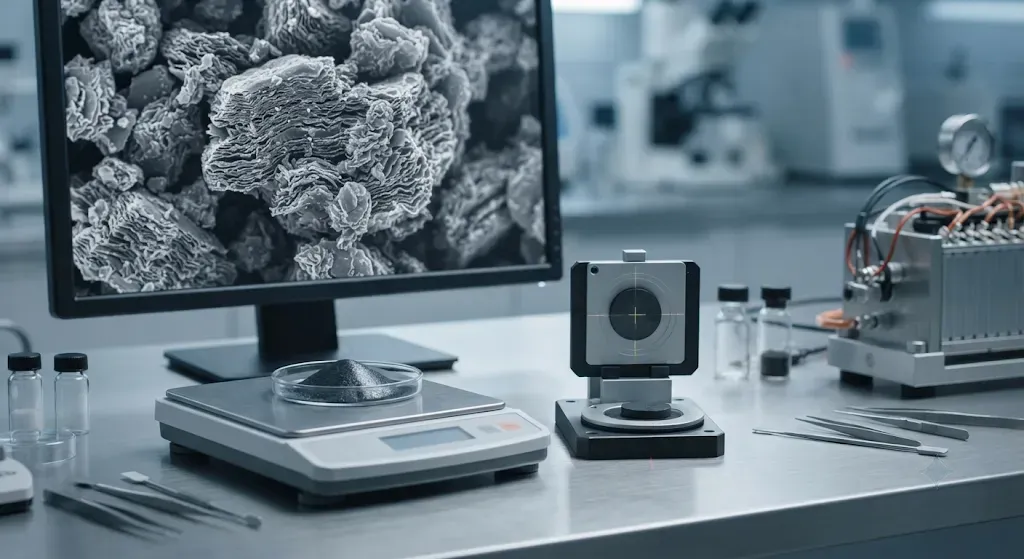
INDIA —TACC Limited has signed a Memorandum of Understanding (MoU) with an international lithium-ion cell producer for the long-term supply of up to 40,000 tonnes of synthetic graphite-based anode active material. TACC Limited is a wholly owned subsidiary of HEG Advanced Materials Limited and operates as an industrial carbon and graphite technology venture under the LNJ Bhilwara Group. The MoU outlines a progressive delivery schedule aligned with the expansion of the partner's manufacturing infrastructure, alongside provisions for joint research and development focused on advanced anode formulations designed to enhance energy density and charging speeds.
This development carries substantial strategic weight for participants across the electric mobility and clean energy storage value chains. Securing reliable, high-purity synthetic graphite supplies remains a critical bottleneck for battery cell producers navigating tightening global supply chains and stringent geographical sourcing mandates. By establishing a framework for high-volume delivery alongside collaborative technical innovation, both organizations aim to mitigate material vulnerabilities while accelerating the commercial deployment of next-generation battery architectures required for high-range electric vehicles.
The broader implications extend significantly across the manufacturing, automotive, and energy storage sectors, particularly for entities scaling up lithium-ion battery gigafactories. As demand for rapid charging capabilities and extended vehicle range intensifies, upstream material developers are under pressure to deliver specialized carbon solutions with strict quality consistency. The partnership highlights a growing industry trend toward collaborative supply arrangements where material producers co-develop proprietary formulations directly with cell makers, reshaping competitive dynamics within the global battery materials ecosystem.
For market participants and institutional investors, the collaboration signals a strategic positioning toward high-value advanced materials within the global energy transition framework. As regulatory pressures and consumer expectations push automotive manufacturers toward superior electrochemical performance, specialized material suppliers capable of scaling production while engaging in advanced metallurgical research will likely capture disproportionate market share. Market observers will monitor the subsequent conversion of this non-binding memorandum into definitive commercial contracts, as well as the execution milestones concerning the planned production capacities for both anode active materials and graphene.