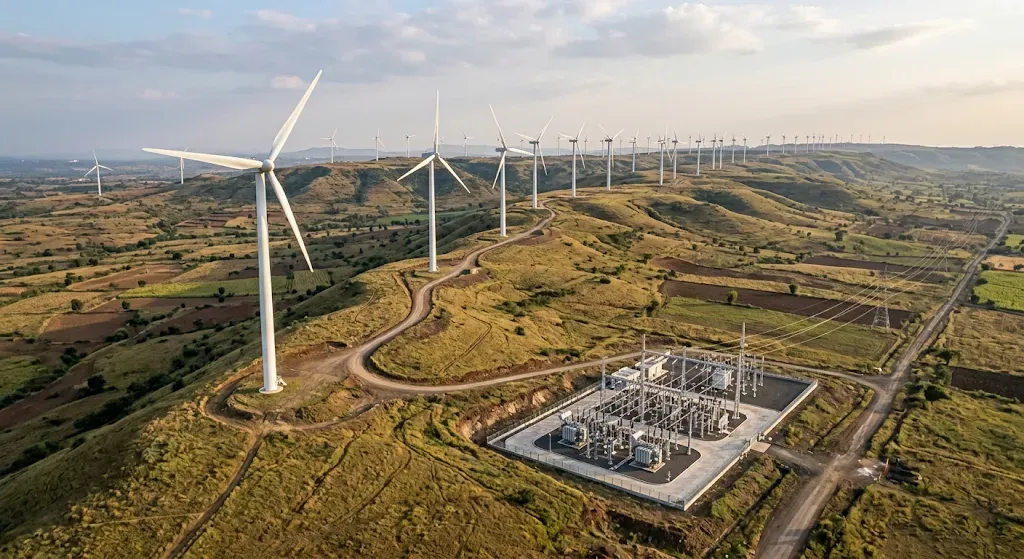
INDIA —Tata Power Renewable Energy has successfully brought online a 100.8 MW wind power generation facility situated in Latur, Maharashtra. Engineered to integrate with urban electricity distribution networks, the installation incorporates 28 horizontal-axis wind turbine generators capable of delivering substantial clean energy volumes annually. This deployment expands the operational footprint of the enterprise while supporting regional sustainability targets and carbon reduction frameworks.
The facility addresses critical grid connectivity demands by augmenting local renewable energy supply for high-demand consumer bases. By displacing fossil fuel generation, the installation contributes significantly to greenhouse gas mitigation objectives, aligning with broader corporate climate commitments and national environmental benchmarks. The project's execution underscores the feasibility of scaling utility-grade renewable assets within densely populated economic zones.
Energy utilities, commercial consumers, and regional distribution enterprises face heightened operational expectations to integrate clean generation assets into existing transmission infrastructure. Engineering adaptations, such as advanced high-voltage line configurations, demonstrate the technical complexities involved in modernizing grid connections. Industrial stakeholders must account for evolving technical standards and regulatory requirements when deploying large-scale renewable infrastructure across regional markets.
Market participants and institutional investors are increasingly prioritizing diversified portfolios that balance traditional generation with scalable green assets. The successful deployment of utility-scale wind projects reinforces investor confidence in corporate energy transitions and regulatory compliance. Long-term capital allocation strategies are expected to favor entities capable of executing complex engineering projects while maintaining grid reliability and cost efficiencies.
Founded in 1919, The Tata Power Company operates as an integrated utility managing a diversified portfolio across thermal generation, renewable energy, and power distribution. The enterprise serves millions of consumers while advancing strategic initiatives in transmission networks, electric vehicle infrastructure, and clean energy manufacturing.