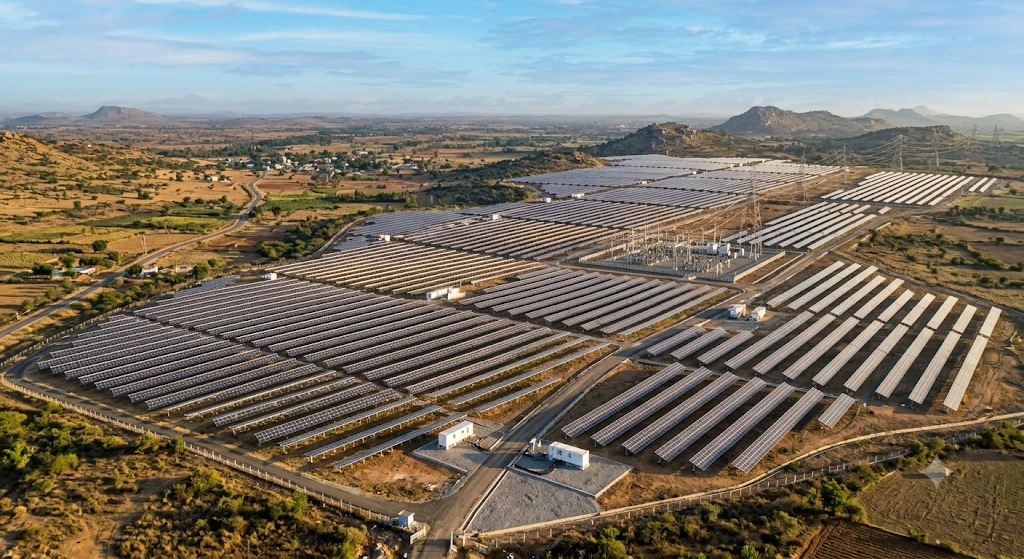
INDIA —Renewable energy generation in southern India has received a major boost with the successful commercialization of a 300 megawatt solar power project in Koppal, Karnataka. Developed by TP Saurya, a wholly owned unit of Tata Power Renewable Energy Limited, the utility-scale installation is configured to feed clean electricity directly into the national grid under a long-term arrangement with the Solar Energy Corporation of India.
The solar park is projected to generate roughly 810 million units of clean power annually, displacing over 100,000 tonnes of carbon dioxide emissions each year. Operationally, the site features significant female representation in technical leadership, with women managing approximately 40 percent of site engineering and project management operations. The commissioned project elevates Tata Power Renewable Energy Limited's total operational utility portfolio to around 7.2 gigawatts, within a broader renewable asset framework spanning solar and wind capacity across India.
This operational addition underscores the rapid scaling of utility-scale solar infrastructure to meet national clean energy targets. By supplying state-backed procurement agencies like the Solar Energy Corporation of India, private developers secure stable long-term cash flows while helping distribution entities meet renewable purchase obligations. The initiative also reflects an evolving industrial workplace dynamic, highlighting increasing technical integration of female engineers in utility-scale field operations.
Tata Power Renewable Energy Limited is a primary clean power development arm of Tata Power, one of India's largest integrated power utility enterprises. The company develops, builds, and operates utility-scale solar and wind installations, roof-top solar systems, and EV charging infrastructure. The Solar Energy Corporation of India is a central public sector undertaking under the Ministry of New and Renewable Energy, acting as the primary nodal agency for implementing utility-scale renewable tender programs in India.
For energy market participants and corporate off-takers, the commissioning demonstrates execution momentum in sovereign-backed solar procurement tenders. Continued capacity additions strengthen regional grid reliability and accelerate the transition toward low-carbon industrial power supplies in major manufacturing hubs.