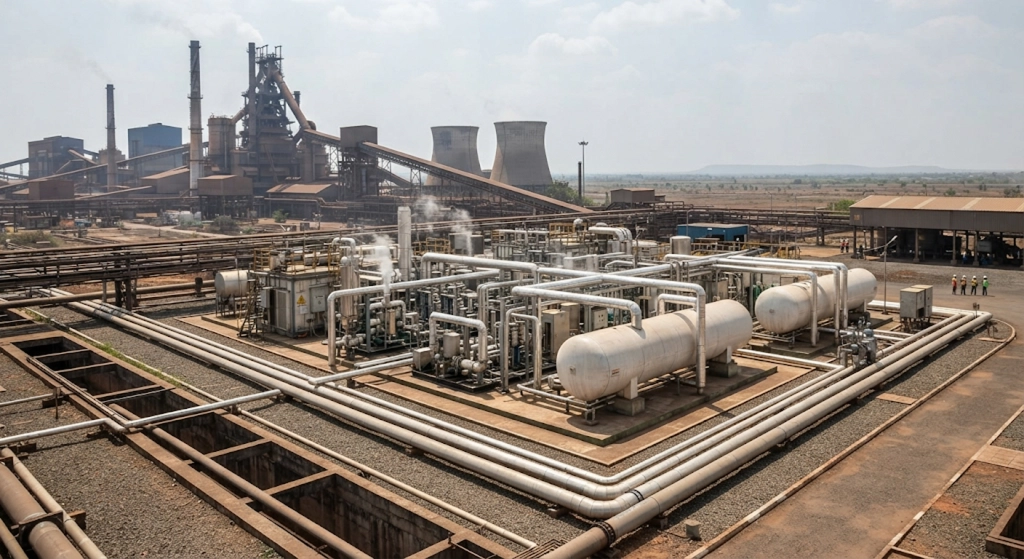
INDIA; UNITED STATES OF AMERICA —Indian steel manufacturer Tata Steel has partnered with Houston-headquartered clean technology developer Utility Global to conduct joint Front-End Engineering and Design studies for an industrial hydrogen production facility at its Kalinganagar steelworks in Odisha. Slated for a daily output capacity of 10 tonnes of high-purity hydrogen, the proposed installation will utilize Utility Global’s proprietary electrochemical H2Gen technology to process carbon monoxide-rich off-gases generated during routine steelmaking operations. Completion of the engineering phase will inform the Final Investment Decision by the Tata Steel board, which will subsequently determine the timeline for plant construction and commercial commissioning.
The initiative represents the first commercial-scale exploration of converting steel plant waste gases directly into high-purity hydrogen within India’s domestic heavy industry sector. By capturing and repurposing existing blast furnace and metallurgical off-gases rather than relying solely on energy-intensive water electrolysis or imported feedstocks, the facility addresses both process emissions and clean fuel generation simultaneously. Utility Global’s electrochemical platform, which has previously undergone operational validation using live blast furnace gases at a Canadian steelmaking site, allows integrated steel mills to extract value from thermal byproducts without overhauling core upstream infrastructure.
Across the broader Indian industrial landscape, this engineering milestone signals a pragmatic shift in how hard-to-abate sectors approach national decarbonisation mandates and emerging carbon border tariffs. Steelmakers, industrial gas suppliers, and heavy engineering contractors across eastern India stand to see heightened demand for gas-conditioning, carbon-management, and electrochemical integration capabilities. Furthermore, demonstrating commercial viability at Kalinganagar could establish a replicable technical benchmark for domestic metallurgical, chemical, and refining operators seeking cost-effective pathways to lower their Scope 1 emissions profiles.
For institutional investors and industrial stakeholders, the partnership underscores a disciplined, phased capital allocation approach toward achieving long-term emissions targets. Tata Steel, one of the world’s most geographically diversified steel producers with an annual crude steel capacity of 36 million tonnes and a consolidated turnover of roughly US$26 billion in the fiscal year ended March 2026, has committed to achieving net-zero emissions by 2045. Integrating the Odisha hydrogen project alongside its existing low-carbon portfolio-which includes a blast furnace carbon capture facility in Jamshedpur, a coke oven gas injection unit in Meramandali, and trials involving biochar and coal bed methane-positions the company to mitigate future carbon-pricing risks while preserving operational cost competitiveness.