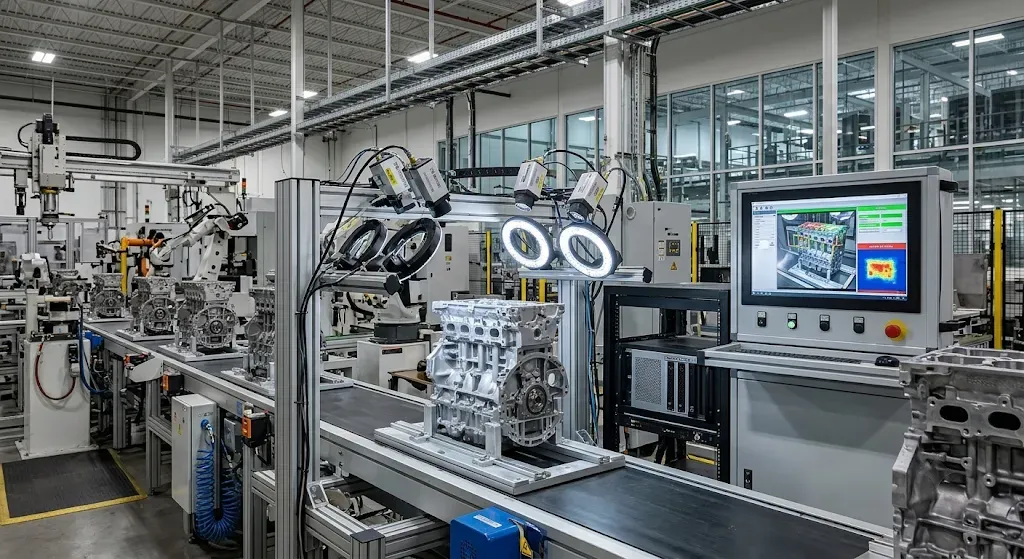
UNITED STATES OF AMERICA —Tristar AI has secured $12.4 million in Series A financing to accelerate the deployment of its artificial intelligence-driven visual inspection platform across industrial facilities. The investment round was led by Isogon Ventures, with participation from multiple institutional investors including Capgemini’s VC Fund managed by ISAI, Blackhorn Ventures, and NextView Ventures. The capital will be directed toward enhancing edge computing capabilities, expanding into new manufacturing verticals, and scaling enterprise rollout operations to meet rising demand for automated quality assurance.
Headquartered in Cambridge, Massachusetts, Tristar AI develops real-time intelligence software designed for factory floor environments. The company’s technology stack connects machine performance metrics with product quality data, integrating seamlessly into existing programmable logic controllers, manufacturing execution systems, and enterprise resource planning networks without requiring hardware replacement.
This financial milestone occurs as global manufacturing faces persistent skilled labor shortages and aggressive reshoring initiatives. As organizations attempt to relocate production capabilities, reliance on manual inspection protocols has become an operational bottleneck, frequently resulting in undetected defects, material scrap, and costly production downtime. By automating defect identification, the platform directly addresses margin erosion and supports the reindustrialization efforts of major industrial stakeholders.
The operational impact extends across multiple high-stakes sectors, including automotive supply chains, plastic film production, injection molding, and advanced packaging. Deployments currently span over 500 production lines throughout North America and Europe, serving prominent industrial entities. The system provides immediate operational feedback to floor personnel while aggregating performance trends for facility management, reportedly achieving high defect-detection accuracy and demonstrating a rapid return on investment within a four-month window.
For industrial investors and enterprise decision-makers, this development signals growing confidence in physical artificial intelligence applications that deliver measurable operational efficiencies. The ability to scale quality control protocols across multi-site networks without disrupting legacy infrastructure presents a strategic value proposition. As manufacturing margins remain under pressure from volatile material costs, technologies that prevent quality escapes before they reach downstream customers will likely see accelerated adoption.