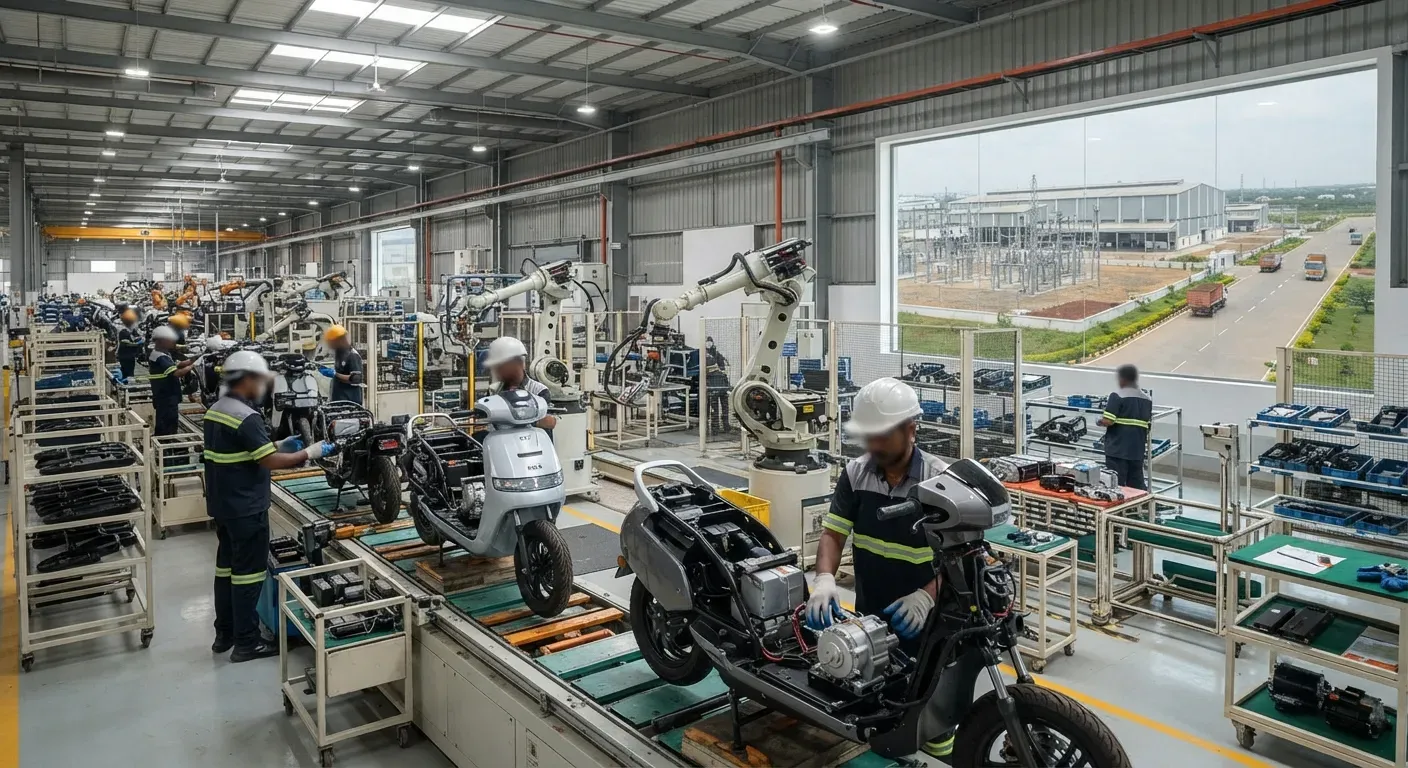
INDIA —TVS Motor has entered into a non-binding memorandum of understanding (MoU) with the Government of Tamil Nadu through its nodal investment promotion agency, Guidance, committing to a proposed investment of Rs 20 billion over a four-year horizon. The agreement, executed on November 25, 2026, outlines plans to generate employment for 1000 people alongside state-level facilitation and infrastructure support subject to applicable laws.
TVS Motor is an Indian manufacturer of two-wheelers and three-wheelers headquartered in Chennai, Tamil Nadu, with operations spanning domestic and international markets. Guidance is the nodal agency of the Government of Tamil Nadu tasked with investment promotion, industrial facilitation, and single-window coordination across the state.
For decision-makers, the agreement highlights sustained capital allocation toward industrial expansion in southern India rather than a sudden shift in immediate balance-sheet commitments. Because the memorandum is non-binding, actual capital deployment over the four-year window will depend on project milestones, land and utility readiness, and timely regulatory clearances. Job creation of 1000 roles indicates targeted expansion in manufacturing, engineering, or supporting operations rather than a broad-based headcount surge.
Within the automotive and industrial ecosystem, the commitment reinforces Tamil Nadu's standing as a major vehicle and component manufacturing cluster in India. State industrial policy relies on infrastructure readiness and regulatory facilitation to attract multi-year manufacturing investments, while component suppliers, logistics providers, and local workforce ecosystems stand to see downstream demand if milestones progress as outlined. At the same time, public disclosures confirm there is no shareholding tie, related-party arrangement, share issuance, or loan structure attached to the agreement, keeping governance straightforward.
For corporate strategists and investors, the key watchpoints center on execution discipline and capital efficiency across the four-year timeline. Tracking how proposed outlays translate into commissioned facilities and productivity gains will matter more than the headline commitment alone. Suppliers and regional partners should monitor state infrastructure rollouts and project schedules closely to align capacity planning without overcommitting ahead of binding commercial contracts.