INDIA —The Union Cabinet, chaired by Prime Minister Narendra Modi, has approved a financial outlay of INR145 billion under a dedicated Viability Gap Funding framework to support the buildout of 92 gigawatt-hours of grid-scale energy storage capacity. Operating across a multi-year execution window from 2026-27 through 2030-31, the government-backed initiative is projected to leverage approximately INR976 billion in total public and private sector investment.
The Union Cabinet serves as the supreme decision-making body of the executive branch of the Government of India, responsible for approving national economic policies and major infrastructure funding schemes. The Ministry of Power oversees federal electricity generation, transmission infrastructure, and grid stability standards across India.
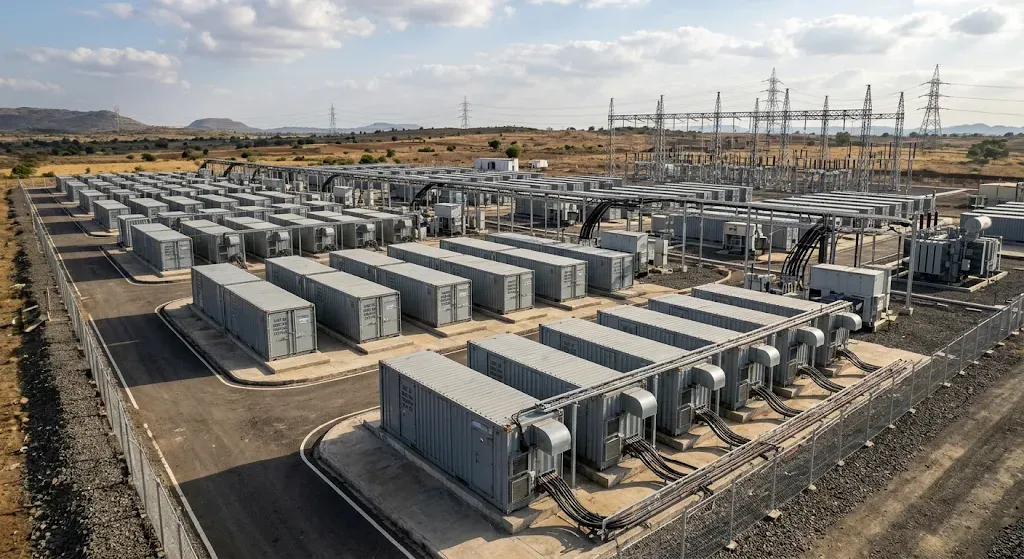
The approved capacity target encompasses 60 gigawatt-hours of Hydro Pumped Storage Projects, 30 gigawatt-hours of Battery Energy Storage Systems, and 2 gigawatt-hours dedicated to emerging long-duration storage technologies. Project capacity will be awarded via tariff-based competitive bidding accessible to public and private distribution utilities. Additionally, battery storage installations under the scheme must comply with a 40 percent Domestic Content Requirement to strengthen local supply chains and component manufacturing.
This policy approval marks a major strategic step toward integrating variable renewable energy sources into India's national power grid. For utility operators, battery manufacturers, and global clean energy investors, the capital subsidy framework significantly reduces project risk for peak-load balancing infrastructure, accelerates decarbonization goals, and establishes a clear regulatory roadmap toward achieving India's target of 411 gigawatt-hours of energy storage by 2031-32.