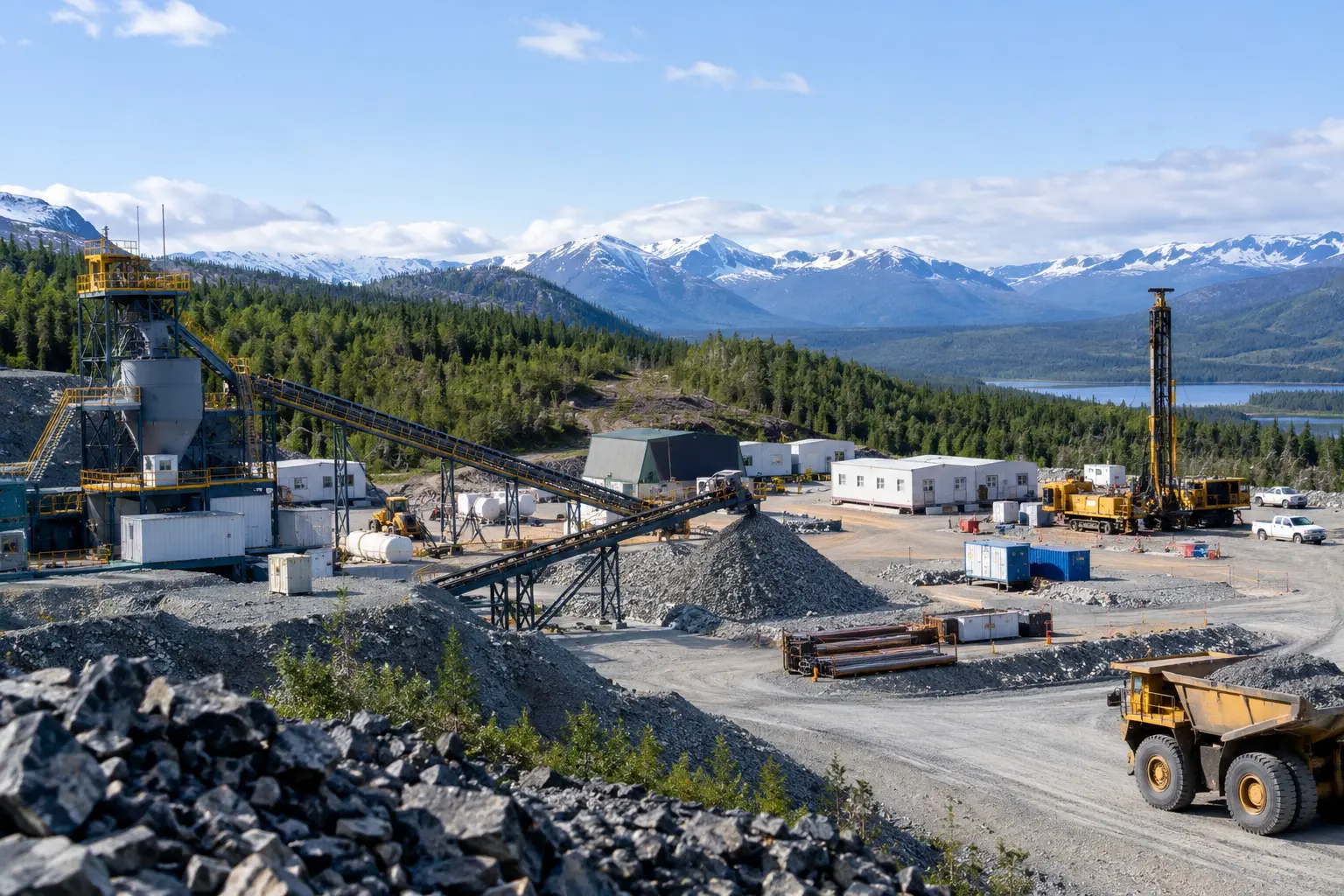
UNITED STATES OF AMERICA —The U.S. Army has allocated up to $40 million in cost-share funding to Perpetua Resources to assess the viability of domestic tungsten production at the Stibnite Mining District in Idaho. Administered through the Defense Ordnance Technology Consortium, this 36-month initiative will finance exploration drilling, metallurgical testing, and the engineering of an underground decline to access high-grade mineral deposits. The company is required to match the government's financial contribution, structuring the initial 18-month phase as an equal partnership.
This development addresses a critical vulnerability in the American defense industrial base. The United States has not engaged in commercial tungsten extraction since 2015, creating complete dependence on a narrow group of foreign suppliers. Recent geopolitical tensions and export restrictions from dominant global producers have elevated the strategic risk for domestic manufacturing and defense contractors. Re-establishing a localized supply chain for this essential hard metal is vital for maintaining uninterrupted production of armor-piercing munitions, aerospace components, and heavy machinery.
Perpetua Resources is a mineral exploration and development enterprise focused on redeveloping the historic Stibnite site in central Idaho, which previously supplied a significant portion of American tungsten and antimony during the mid-twentieth century. The Defense Ordnance Technology Consortium serves as a collaborative framework enabling the military to partner with private industry for advanced sustainment and ammunition technologies. By leveraging this existing partnership, the initiative targets the evaluation of previously identified high-grade zones beneath the Hangar Flats deposit, expanding the site’s utility beyond its currently permitted gold and antimony operations.
For investors and defense stakeholders, this agreement signals a sustained federal commitment to onshoring critical mineral supply chains. The allocation adds to $126 million in total government awards secured by the company for critical minerals since 2022, de-risking early-stage exploration expenditures. Successful execution of the metallurgical and drilling programs could validate a new domestic resource category, potentially attracting further institutional capital and long-term offtake agreements from defense primes seeking compliant, non-foreign sourcing for their manufacturing pipelines.