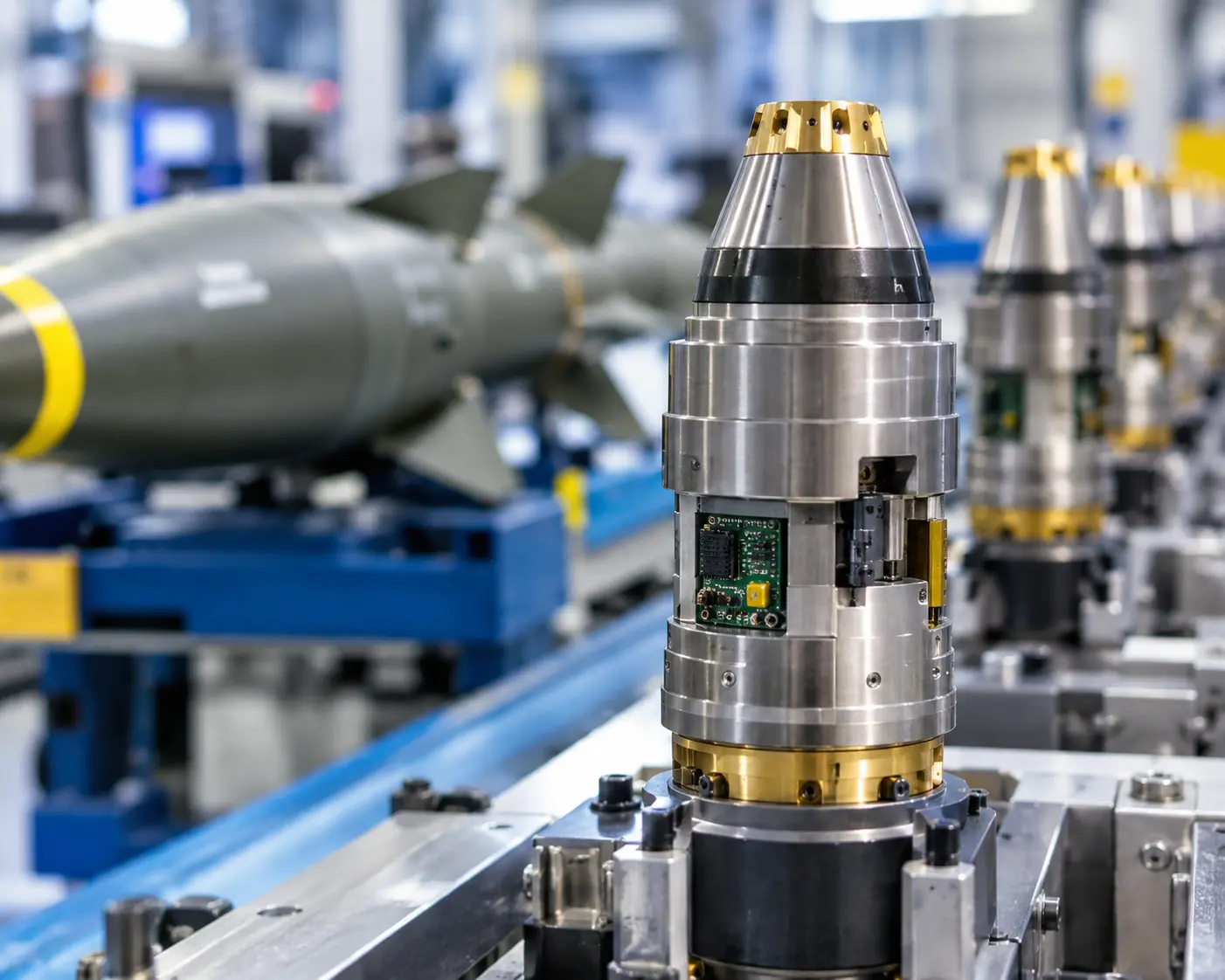
UNITED STATES OF AMERICA —The U.S. Navy has approved an additional contract allocation of approximately USD 97 million to Northrop Grumman for the ongoing production of FMU-139D/B electronic bomb fuzes. The modification raises the ceiling of the existing agreement and ensures continued manufacturing of these components, which regulate the arming and detonation sequence of air-delivered munitions. The fuze systems are deployed across various U.S. and allied military aircraft and compatible weapons platforms.
Manufacturing takes place at the Naval Industrial Reserve Ordnance Plant within Northrop Grumman's Allegany Ballistics Laboratory (ABL) in Rocket Center, West Virginia. The facility has an annual production capacity of up to 85,000 fuzes following investments in automation and advanced manufacturing technologies. Earlier in 2026, the company delivered its 200,000th FMU-139D/B unit, reflecting the established scale of the production programme.
The contract expansion comes amid continued efforts by the U.S. military to maintain adequate inventories of air-delivered weapons and strengthen the industrial capacity supporting ammunition supply chains. Electronic fuzes are essential components of these systems because they determine the functioning and timing of munitions. Maintaining their availability is therefore relevant to operational readiness, inventory replenishment and the reliability of broader weapons supply networks.
The development has implications for the U.S. defence manufacturing sector, particularly suppliers involved in electronic components, precision engineering, energetic materials and ammunition production. Continued output at ABL also supports the domestic defence industrial base and provides manufacturing capacity for systems used by allied forces. Higher production capabilities could help the Navy respond to changing procurement requirements and periods of increased demand.
For Northrop Grumman, the modification provides additional production visibility for an established defence product and supports the utilisation of its West Virginia manufacturing infrastructure. The company operates across aerospace, defence and advanced technology markets, supplying military platforms, mission systems, weapons and related capabilities. The expanded contract reinforces its role in the U.S. precision-fuzing supply chain, while sustained demand for conventional munitions is likely to keep production capacity and supply-chain resilience important considerations for defence procurement authorities and industry suppliers.