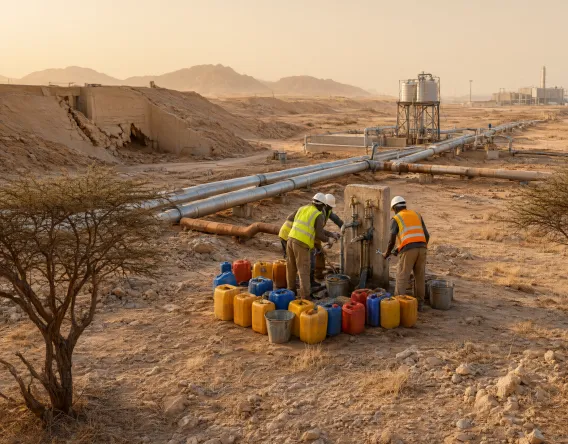
SUDAN —The African Development Bank Group (AfDB) and UNICEF have launched the Port Sudan Emergency Water and Sanitation Project, backed by roughly USD 55 million in financing from the African Development Fund (ADF) alongside UNICEF co-financing. Following an official launch and two-day implementation workshop held from November 15 to November 17, 2026 with government authorities and partners, the program aims to reach approximately 750,000 people. Roughly 600,000 residents in Port Sudan are slated for improved water and sanitation services, while emergency water support extends into North and South Kordofan.
Municipal water systems in Port Sudan have faced severe strain since civil conflict erupted in April 2023 brought large numbers of displaced households into the city. The 2024 collapse of the Arba'at Dam compounded pressure on already stretched reservoirs, leaving demand well ahead of supply. Planned interventions include restoring core water assets, adding 10,000 cubic meters per day of desalination capacity, laying 187 kilometers of pipelines, building or rehabilitating 50 community water points, and upgrading sanitation and handwashing facilities in schools, clinics, and public sites.
In fragile operating environments, basic utility reliability directly shapes workforce stability, public health containment, and commercial continuity. Interrupted water access elevates disease risks near healthcare centers and public facilities, while constrained municipal supply forces households and institutions toward higher-cost alternatives. Pairing near-term relief with expanded desalination and distribution lines addresses both acute shortages and climate exposure along a coastal hub that has absorbed heavy population inflows.
For regional engineering, water treatment, and civil construction contractors, the project signals targeted capital deployment in desalination, pipeline networks, and decentralized water points despite security and logistics friction. Multilateral and UN co-financing structures also shape procurement governance, local operator training, and asset maintenance planning in high-risk markets. For institutional observers and development financiers, the initiative illustrates how concessional funds and humanitarian agencies are blending emergency response with longer-term utility resilience where municipal infrastructure has deteriorated.
The African Development Bank Group (AfDB) is a multilateral development finance institution focused on economic growth and poverty reduction across its regional member countries, operating concessional financing through the African Development Fund (ADF). UNICEF is a United Nations agency dedicated to advancing child rights, survival, and well-being globally, acting here as the project's implementing partner.