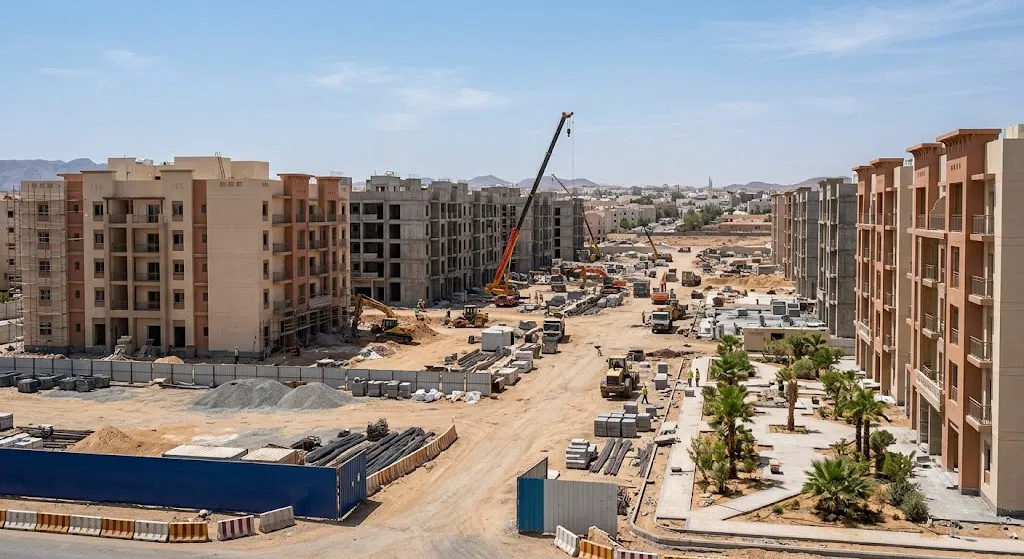
INDIA —State authorities in Uttar Pradesh have transferred management rights of the Ansal API high-tech residential development in Lucknow to the Lucknow Development Authority (LDA). The regional urban planning agency will spearhead the completion of essential infrastructure and bring the project before the National Company Law Tribunal (NCLT) as part of ongoing insolvency proceedings. Initial estimates place total project liabilities at nearly INR 29.12 billion, supported by state government seed capital to cover finalized obligations.
The Lucknow Development Authority (LDA) is a state-governed body established to oversee civil infrastructure, public utilities, and urban planning across the Lucknow metropolitan area. M/s Ansal Properties and Infrastructure Ltd is an Indian real estate firm involved in large-scale residential and commercial property development under regional government housing initiatives.
This intervention highlights growing regulatory scrutiny over real estate developments executing public-private infrastructure arrangements in India. By stepping in to resolve a project bottlenecked by missing civic utilities, power substations, and transit links, the government aims to mitigate systemic risks for urban property markets while preserving underlying municipal and mortgaged land assets against third-party claims.
Completing the unfinished site will require an estimated expenditure of INR 22.17 billion dedicated toward essential utilities, including 50 kilometers of roadways, drainage systems, water supply networks, and dedicated electrical substations costing roughly INR 5.23 billion. These costs, along with outstanding regulatory dues claimed by local authorities, are expected to be adjudicated under the legal oversight of the Interim Resolution Professional.
For urban developers and corporate investors, the event underscores the financial, administrative, and legal risks associated with non-compliance in large-scale housing projects. Government intervention provides a framework to restore property values, complete key public infrastructure, and offer asset protection mechanisms for institutional stakeholders and residential purchasers during corporate restructuring.