SWITZERLAND; UZBEKISTAN —An allocation agreement approved on November 24 clears the transfer of $252.5 million in seized assets from Switzerland to Uzbekistan for social sector programming. The disbursement expands a bilateral asset-return mechanism built around the Ishonch Trust Fund, also referred to as the Uzbekistan Vision 2030 Fund, following an earlier $87 million first-phase tranche directed toward health and education initiatives.
Uzbekistan's Ministry of Economy and Finance serves as the central fiscal authority managing macroeconomic planning, public budget execution, and international development financing in Tashkent. Under the second phase of the Resource Allocation Strategy, senior representatives from the ministry, the Swiss diplomatic mission, and the United Nations resident coordination office formalized how the incoming capital will be deployed across priority programs.
Channeling recovered illicit funds into structured public service budgets matters because it converts legal enforcement and cross-border asset recovery into measurable human capital spending without adding sovereign debt. For Uzbekistan, scaling investments in clinical care and school infrastructure addresses long-term workforce readiness and demographic pressures while testing multi-stakeholder governance standards.
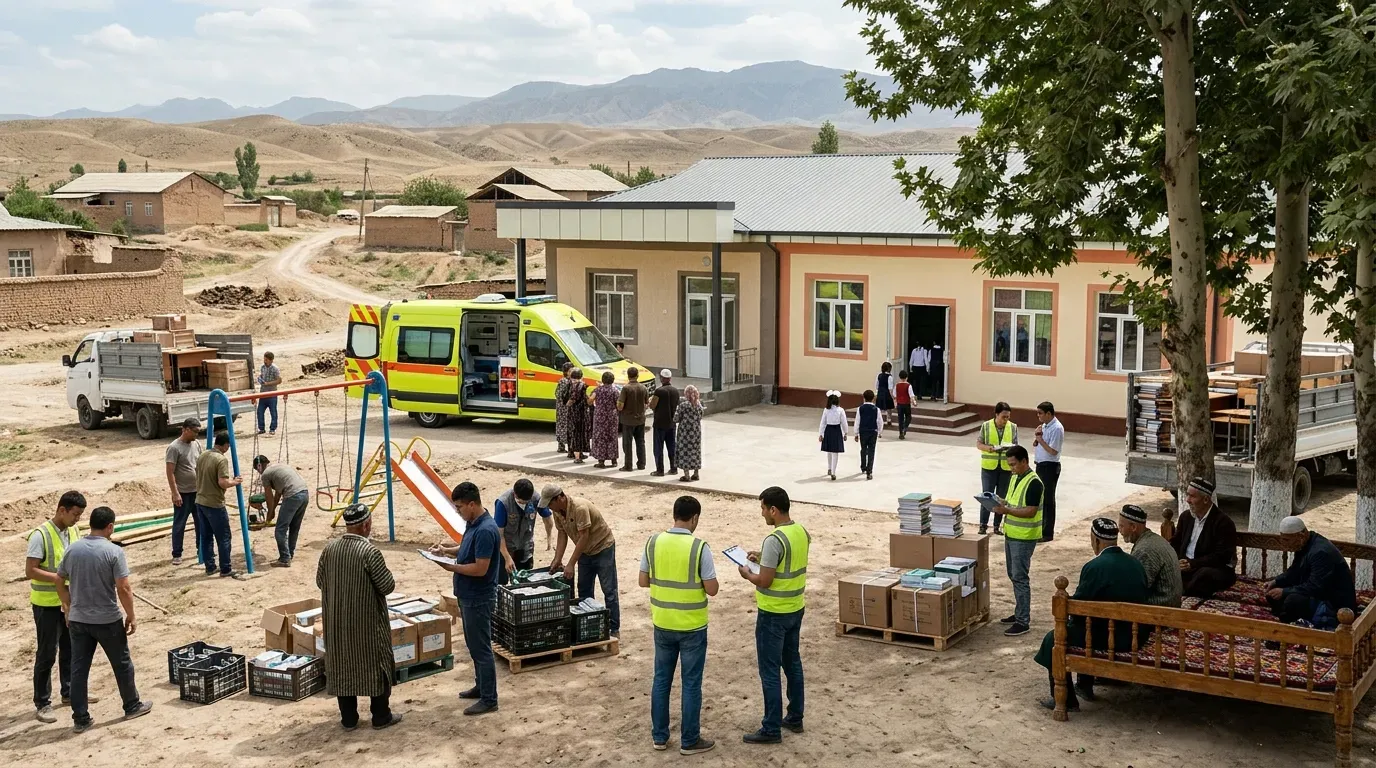
In healthcare, the second-phase framework prioritizes pediatric and adolescent care, preventive screening and early detection, access to oncology treatments, and continuous training for medical personnel. In education, planned interventions focus on constructing new schools, upgrading existing facilities, integrating digital classroom tools, raising teacher qualifications, and broadening access to quality instruction, with particular attention to rural districts and underserved populations.
Programs under the fund are executed by the United Nations and the World Bank alongside Uzbek authorities, incorporating anti-corruption controls, targeted expenditure rules, results-based evaluations, and independent monitoring with civil society participation. This structure shapes public procurement and service-delivery governance by pairing multilateral operational oversight with domestic policy execution.
For commercial suppliers, contractors, and institutional observers, the deployment creates structured demand across medical equipment, diagnostic and oncology supply chains, school construction and renovation, educational technology, and technical advisory services. While multilateral and public-sector compliance rules govern vendor participation, predictable multi-year funding across provincial and rural markets signals sustained activity in social infrastructure and human capital development.