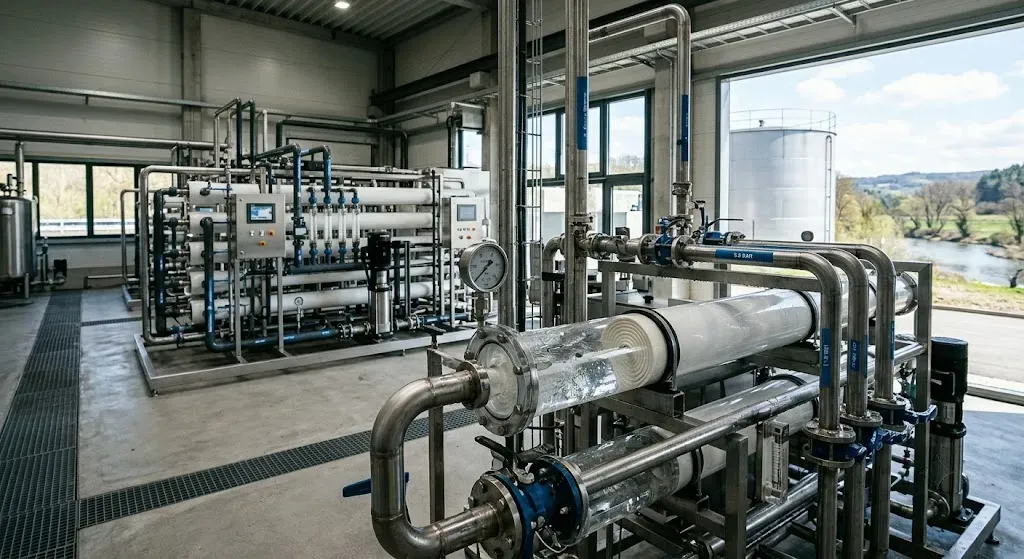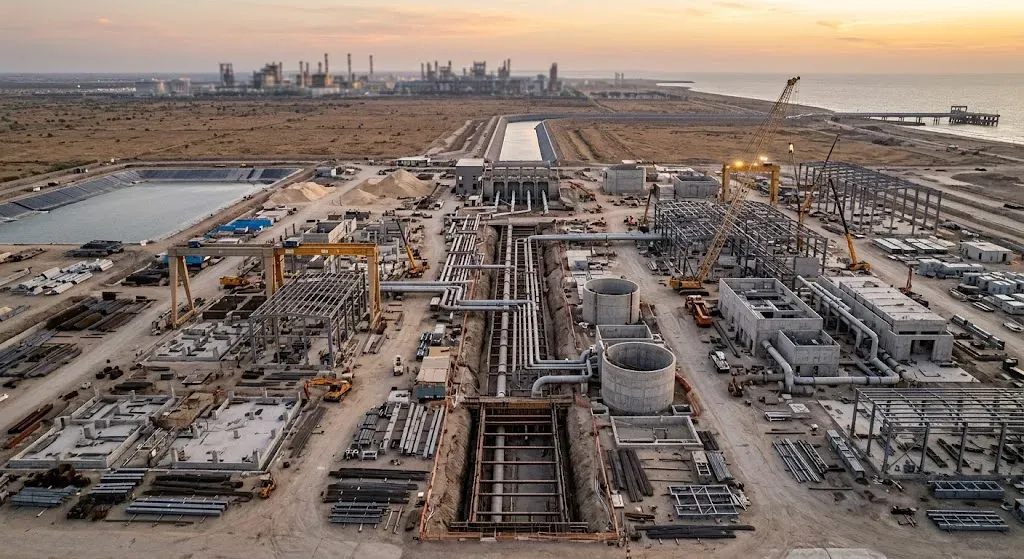
INDIA —Va Tech Wabag has been awarded a substantial contract by Reliance Industries to execute the design, engineering, supply, and commissioning of an advanced industrial water processing facility located in Jamnagar, Gujarat. The project centers on the establishment of a large-scale seawater desalination plant featuring an initial processing capacity of 8,400 cubic meters per hour, with structural provisions to scale up to 12,600 cubic meters per hour, alongside a complementary 3,000 cubic meters per hour remineralization unit. Reliance Industries is a major Indian multinational conglomerate with extensive operations spanning energy, petrochemicals, retail, and telecommunications. Va Tech Wabag operates globally as a specialized pure-play water technology group focusing on municipal and industrial infrastructure development.
This infrastructure expansion addresses critical industrial water security demands for large-scale refining and manufacturing operations in water-stressed coastal regions. By implementing advanced treatment technologies such as ultrafiltration and reverse osmosis, the facility ensures a reliable, high-purity water supply necessary for continuous heavy industrial output. The integration of a dedicated remineralization system highlights the technical precision required to balance treated water parameters for specific operational standards. Such investments underscore the growing necessity for robust, scalable utility assets that can mitigate environmental scarcity risks while supporting heavy industrial clusters.
The engineering, procurement, and construction sector, particularly firms specializing in advanced water management and municipal or industrial utilities, stands to benefit significantly from large-scale private capital deployment into complex environmental infrastructure. Regulatory compliance frameworks concerning industrial discharge and resource optimization heavily influence these project timelines, making specialized technical expertise a key differentiator for engineering firms. Furthermore, regional manufacturing hubs and utility providers closely monitor these high-value capital expenditures as benchmarks for future large-scale industrial outsourcing and public-private utility integration.
For corporate strategists and industrial investors, this contract win signals sustained corporate expenditure directed toward internal resource resilience and sustainable utility management. The 25-month phased execution schedule provides predictable revenue recognition for specialized technology providers while mitigating execution bottlenecks through structured milestones. Investors evaluating heavy engineering and water infrastructure assets must consider long-term technological capabilities, execution track records, and exposure to industrial capital expenditure cycles as primary indicators of sustained market competitiveness.