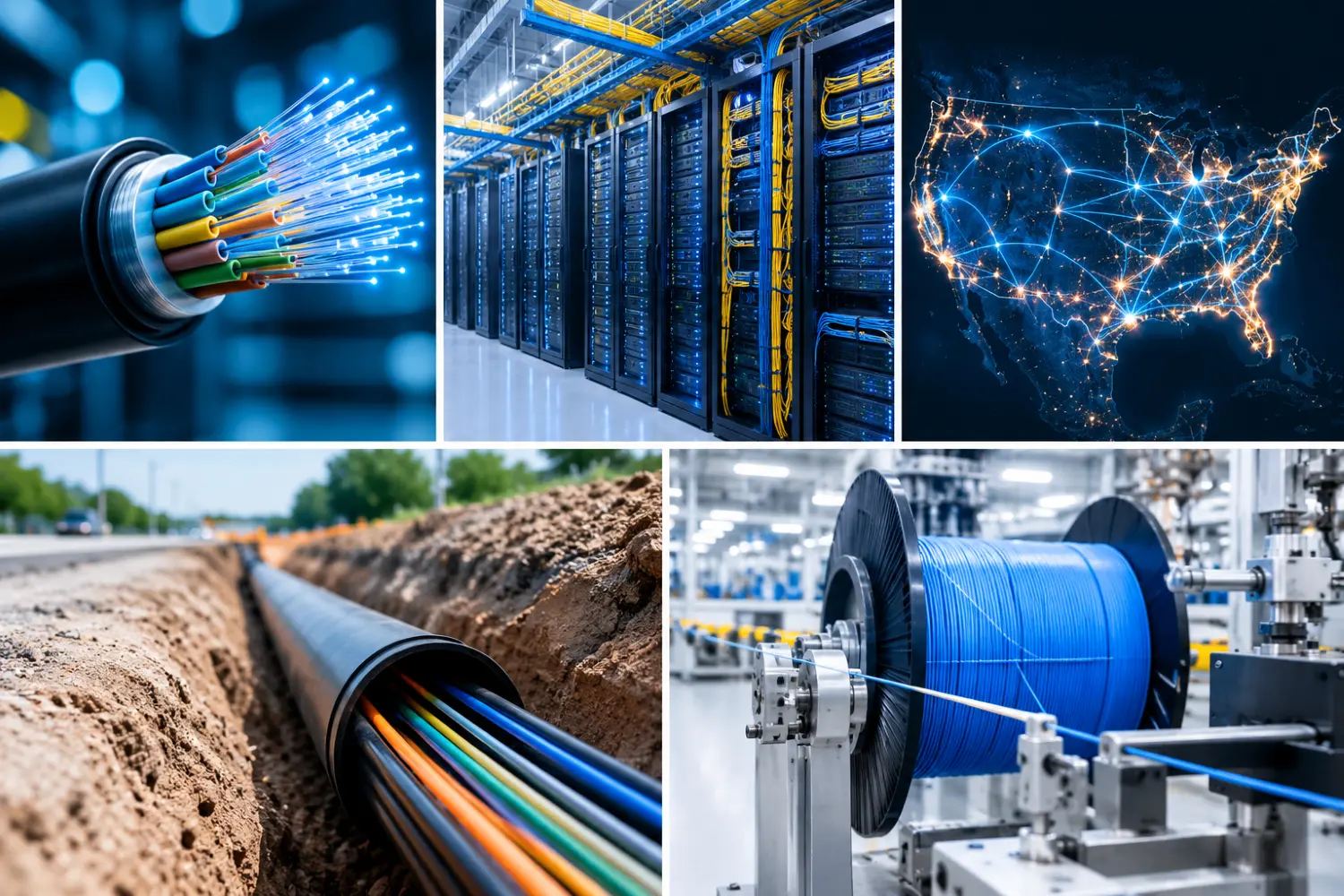
UNITED STATES OF AMERICA —Verizon has signed a multi-billion-dollar agreement with Corning covering the supply of more than 80+ million miles of high-density optical fiber and connectivity solutions from 2027 through 2032. The materials will be used across Verizon’s broadband and long-haul network expansion, linking residential and business customers with infrastructure serving mobile networks and data centers.
The agreement comes as Verizon expands its fiber footprint while addressing increasing requirements from AI workloads. The company is targeting 40 million to 50 million broadband passings and plans to deploy high-density fiber along major long-haul corridors under its AI Connect strategy. These routes are intended to provide high-capacity, low-latency connections between data centers used by large technology companies and AI infrastructure operators.
The deployment also reflects a shift toward a common network architecture capable of supporting multiple connectivity requirements. Residential broadband, mobile infrastructure, enterprise locations and data centers can be connected through the same high-capacity fiber backbone, allowing network investments to serve both conventional communications demand and emerging AI traffic.
For the US telecommunications industry, the agreement increases the scale of planned optical-fiber deployment and creates additional demand for fiber, cable and connectivity equipment. Corning’s role also links Verizon’s network expansion to domestic manufacturing capacity, with the supplier expected to expand its US production footprint to support the programme.
Among the products covered by the broader deployment is Corning’s Contour Flow Cable, a high-density optical-fiber solution designed to place more fiber within existing conduit pathways. Higher fiber density can allow operators to increase network capacity while making greater use of existing underground infrastructure, an important consideration as demand for broadband and data-center connectivity rises.
The agreement has implications beyond consumer broadband because the same physical infrastructure can support AI data-center interconnection and enterprise connectivity. For network operators and infrastructure suppliers, sustained demand for high-capacity optical networks could support investment in fiber manufacturing, cable systems, network construction and related deployment services across the US.
Verizon is a major US telecommunications company providing wireless, broadband and business communications services. Corning is a US technology and materials company with a major optical communications business supplying fiber, cable and connectivity technologies used in telecommunications networks.