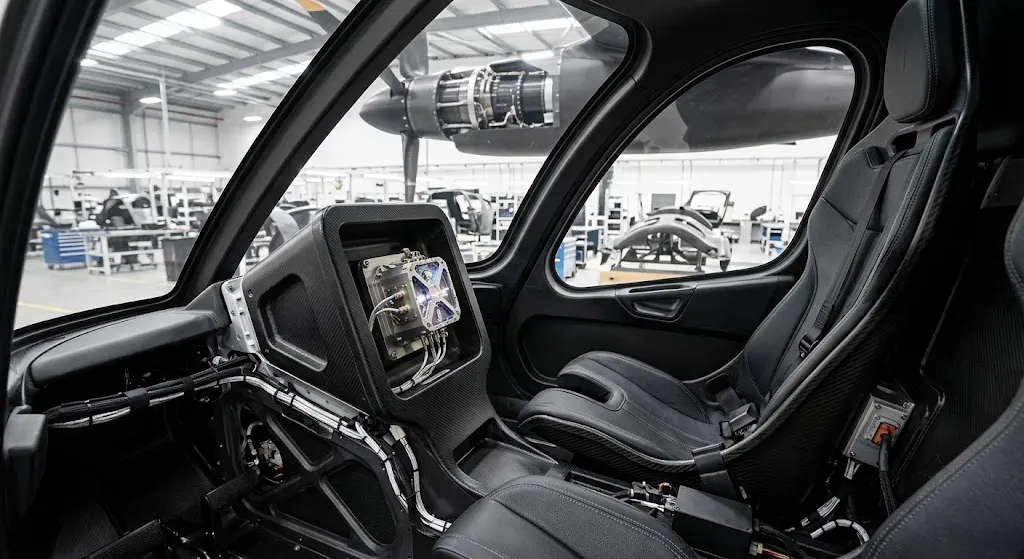
UNITED KINGDOM —Vertical Aerospace has entered into long-term supplier agreements with ANH Structure and Northrop Grumman LITEF to equip its Valo electric vertical take-off and landing aircraft with critical cabin and navigation hardware. Under the terms, ANH Structure will handle the design, certification, and production of bespoke seating systems incorporating proprietary energy-absorption technology for pilot and passenger configurations. Concurrently, Northrop Grumman LITEF will provide its LCR-110 inertial reference system to deliver essential heading, attitude, and position metrics for flight-critical operations. Vertical Aerospace is a British aerospace developer focused on electric aviation and the creation of zero-emission passenger and cargo transport platforms.
These supplier selections fortify a broader industrial ecosystem that already incorporates major technology and engineering providers to support the manufacturing scale-up of the Valo platform. By securing specialized components early, the developer aims to streamline regulatory compliance across multiple cabin configurations, including potential hybrid-electric and autonomous variants. This modular strategy is engineered to simplify production overhead and accelerate entry into service across commercial and defense markets.
The agreements carry direct operational consequences for the advanced air mobility sector, particularly regarding cabin safety standards and precise navigation hardware requirements mandated by civil aviation authorities. Suppliers specializing in lightweight architectural materials and high-integrity sensor systems stand to gain traction as original equipment manufacturers establish certified supply chains. Furthermore, the alignment of South Korean and German engineering firms with a British platform highlights the increasingly cross-border nature of component sourcing in next-generation aviation.
For financial stakeholders and commercial operators, these procurement milestones offer visibility into the structural readiness of the developer's manufacturing roadmap. Expanding the vendor network mitigates single-source bottlenecks and de-risks the path toward serial production and fleet integration. Investors tracking the advanced air mobility landscape can interpret these supplier commitments as indicators of steady progression through regulatory gateways toward commercial viability.