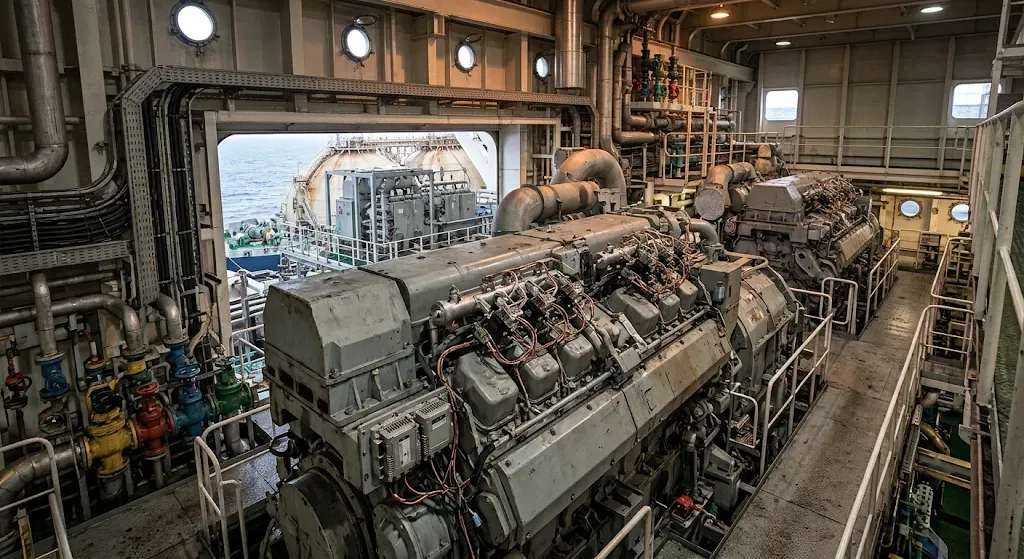
FINLAND; UNITED STATES OF AMERICA —Wärtsilä has completed the first phase of an LNG carrier engine conversion programme for Chevron Transport Corporation, upgrading one engine on each of three vessels from dual-fuel operation to spark gas mode. The companies plan to carry out the same modification on three additional ships later in 2026 and during 2027, taking the programme total to six vessels.
The conversion targets methane slip, which occurs when some of the methane supplied as LNG fuel passes through an engine without being combusted. The upgraded Wärtsilä 50DF engines use spark ignition instead of diesel pilot fuel to initiate combustion. An electrically controlled valve in the pre-combustion chamber supports the revised process. Wärtsilä estimates that the system can bring methane emissions down to 1.1% of fuel use on the International Maritime Organization's weighted E2-cycle average.
Methane reduction is an important consideration for LNG-fuelled shipping because emissions from incomplete combustion can undermine the climate benefits sought through changes in marine fuel. Improving engine performance on vessels already in operation offers shipowners another route to address emissions without replacing entire propulsion systems. The technology is intended for ships fitted with Wärtsilä 50DF engines in diesel-electric configurations, most commonly found on LNG carriers.
The programme has implications for LNG shipowners, marine engine suppliers and operators involved in transporting natural gas. If the conversion demonstrates consistent results in fleet operations, it could support wider demand for engine retrofits among owners of compatible vessels. However, deployment will depend on technical suitability, vessel operating profiles and the commercial case for modification. The stated emissions reduction is based on a weighted test cycle and should not be interpreted as a guaranteed outcome for every operating condition.
Wärtsilä, headquartered in Finland, develops and supplies technologies and lifecycle services for the marine and energy markets, including engines and propulsion systems. Chevron is a US-based integrated energy company with shipping operations supporting the movement of energy commodities. The completed conversions give both companies experience with spark gas operation in LNG carrier service, while the planned follow-on work will extend the technology's use across Chevron's fleet. The project also provides a potential reference for other operators evaluating methane reduction measures for existing LNG-powered vessels.