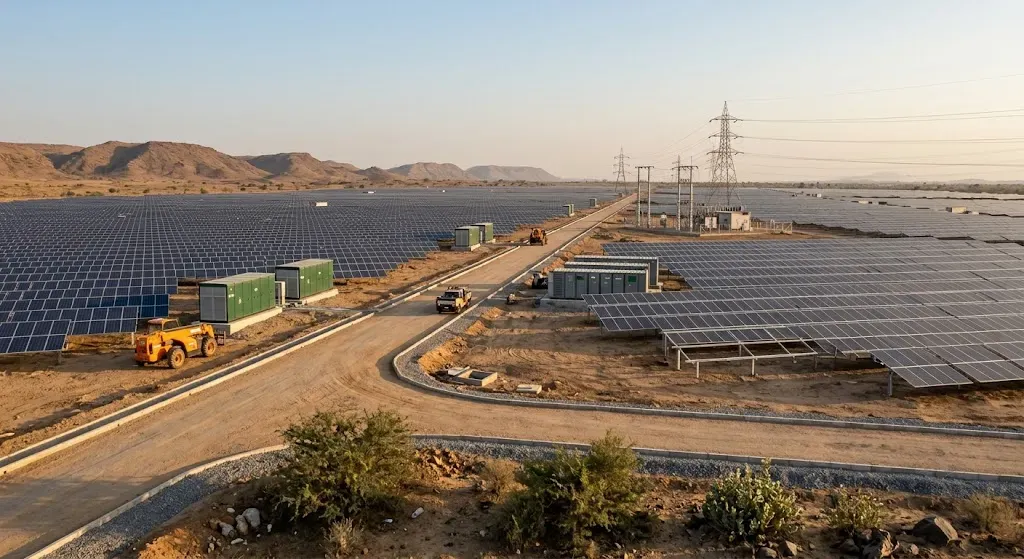
INDIA —Waaree Renewable Technologies Limited has secured a revised commercial scope under an ongoing utility-scale infrastructure contract, expanding its financial involvement by approximately Rs. 220 million excluding taxes. The updated agreement pertains to the engineering, procurement, and construction delivery of a ground-mount photovoltaic power facility possessing a total capacity of 150 MWac and 217.5 MWp. Originally structured via an initial disclosure made in October 2025, the project terms have been formally amended to incorporate this expanded scope while keeping all core contractual provisions and delivery timelines intact.
Headquartered in Mumbai, India, Waaree Renewable Technologies Limited operates as a specialized renewable energy subsidiary focused on delivering comprehensive solar engineering solutions and large-scale power infrastructure development. The enterprise functions within the broader clean energy sector to support commercial power generation assets across domestic markets.
This development is significant as it highlights the operational flexibility and ongoing capacity adjustments common within utility-scale renewable energy execution. For project developers and engineering firms, managing scope enhancements under existing frameworks reduces administrative friction while allowing projects to scale efficiently to meet specific generational targets within designated operational periods.
The adjustment directly impacts the renewable energy manufacturing and engineering, procurement, and construction sectors, particularly domestic suppliers and project developers operating within the Indian clean energy landscape. Stakeholders such as component manufacturers and grid-integration partners must align resource allocation to accommodate the enhanced capacity requirements during the scheduled execution window.
From an investor and strategic market perspective, the financial adjustment underscores steady revenue progression and execution capability within contracted pipelines. Market participants monitor such contract amendments as indicators of project health, localized capital allocation trends, and the operational adaptability of engineering providers navigating shifting domestic energy demands.