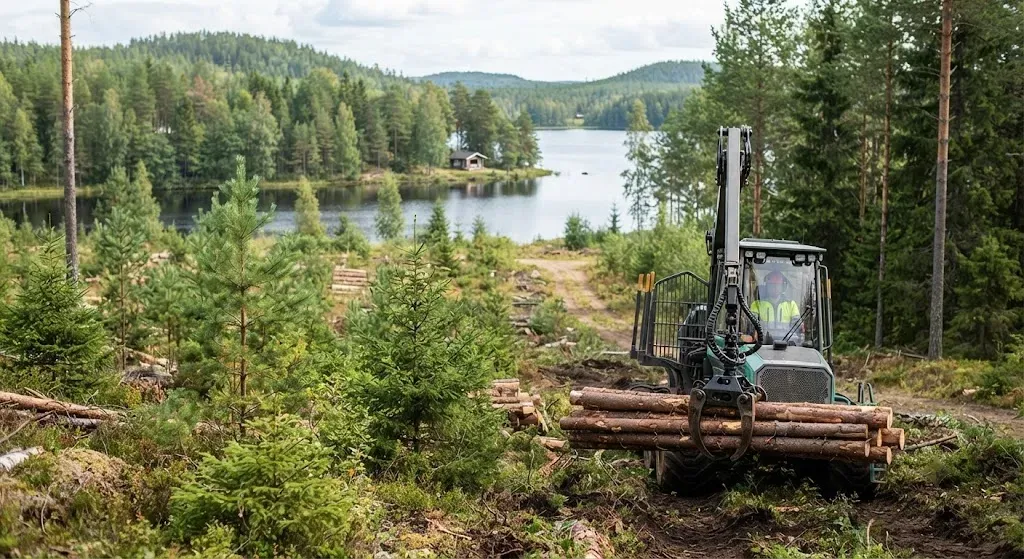
LIBERIA —The World Bank Group (WBG) has authorized $45.4 million in financing for the Liberia Forest Economy Project, known as LiFE-P, establishing the initial phase of a planned eight- to 10-year program. The funding package combines a $40 million credit from the International Development Association (IDA) with a $5.4 million grant from PROGREEN, a global partnership administered by the World Bank Group (WBG) that supports sustainable and resilient landscape management.
Operating across Gbarpolu, Grand Cape Mount, Grand Bassa, Rivercess, Grand Gedeh, and Sinoe counties, the initiative is designed to reach approximately 110,000 beneficiaries, including at least 45% women and at least 20% youth. Projections indicate the program will help generate roughly 50,000 new jobs while cutting net greenhouse gas emissions by an estimated 5.2 million tons of carbon dioxide equivalent over 25 years.
Liberia contains the largest remaining portion of the Upper Guinea Forest, a high-biodiversity ecosystem whose economic and livelihood potential has been constrained by institutional capacity gaps, governance challenges, and underdeveloped value chains. By pairing regulatory reform with commercial enterprise support, the financing seeks to align conservation outcomes with measurable household income growth and climate resilience.
Key operational pillars include strengthening legal enforcement, open data, and digital traceability systems alongside institutional capacity building at the Forestry Development Authority. The program also backs 20 Community Forest Management Areas, degraded land and plantation restoration, and improved management of Gola Forest National Park and Lake Piso Multiple Use Reserve, covering roughly 892,600 hectares under strengthened conservation or sustainable management.
For commercial stakeholders and investors, LiFE-P introduces enterprise and workforce initiatives-Forestry Enterprise Grow and Forestry Skills Grow-aimed at engaging around 1,000 enterprises and unlocking approximately $17 million in private capital. Enhanced digital traceability and clearer governance standards can lower compliance friction for agribusiness, sustainable timber, and non-timber forest product operators while creating long-term demand for technical advisory, logistics, and land-restoration services.
The World Bank Group works across more than 100 countries to deliver financing, policy advice, and technical solutions focused on poverty reduction, job creation, economic growth, and climate resilience. Through its institutions, it supports public-sector reforms and private-sector investment across developing markets.