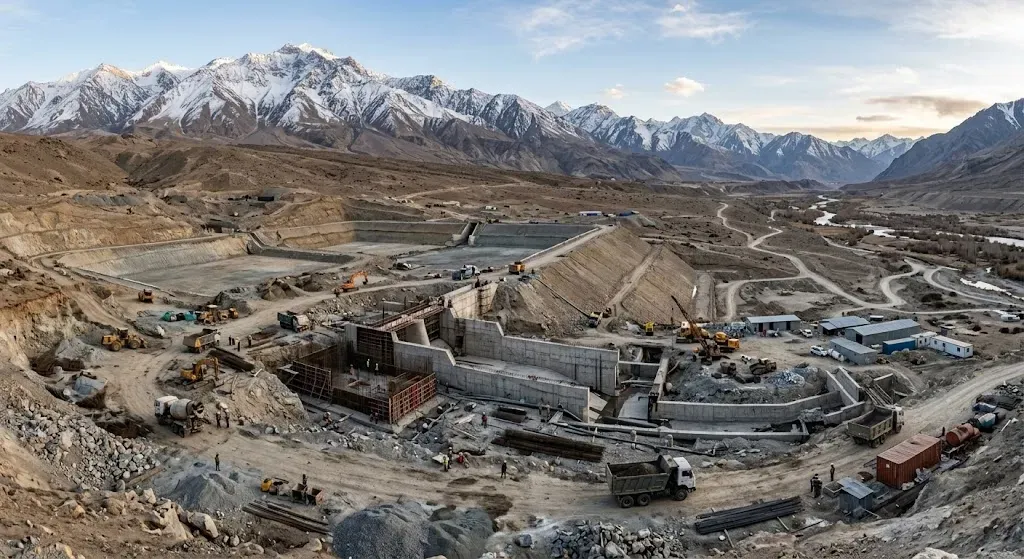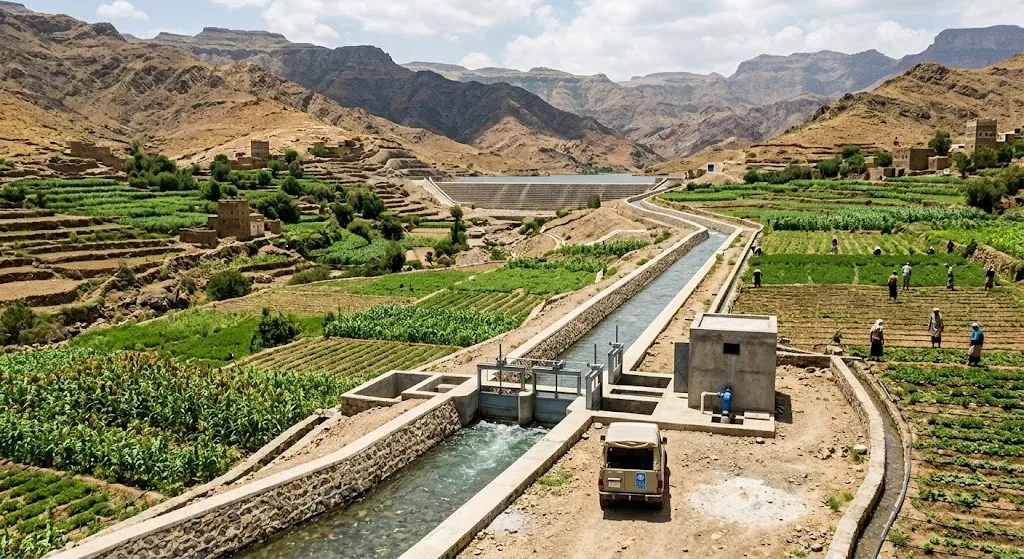
YEMEN —Yemen has begun implementing a US$150 million water management and irrigation programme intended to improve the reliability of water supplies, agricultural production and resilience to extreme weather. The Improved Water Management and Irrigation for Sustainability and Efficiency Project (I-WISE) will initially focus on the Aden-Tuban and Wadi Hajir basins, combining resource monitoring, irrigation improvements and climate-resilient infrastructure.
The initiative is supported by the World Bank Group’s International Development Association and the Government of the Netherlands through the Yemen Resilience, Recovery and Reconstruction Umbrella Trust Fund. It forms the first phase of a planned 10-year programme addressing water scarcity and food insecurity. Project targets indicate that more than 850,000 people are expected to benefit, including 375,000 through resilient infrastructure.
Implementation involves Yemen’s Ministry of Water and Environment, Ministry of Agriculture, Irrigation and Fisheries, the United Nations Development Programme (UNDP) and the United Nations Office for Project Services (UNOPS). UNDP will lead the development of a national Climate and Water Information Management System, integrated watershed management and climate-resilient irrigation. UNOPS will restore and expand water supply and sanitation networks serving urban, peri-urban and displaced communities.
The investment addresses interconnected risks affecting Yemen’s economy and communities. Limited water availability, droughts, flash floods, conflict and displacement place pressure on agricultural livelihoods, food supplies and public health. Planned activities include hydrological monitoring, improved water allocation, sustainable groundwater management, wastewater reuse and early-warning capabilities for droughts and floods. The programme will also support Water User Associations and Water Basin Committees, while expanding training and participation opportunities for women in water governance and related activities.
For the agricultural sector, more efficient irrigation and stronger local water institutions could help reduce exposure to supply disruptions and improve the management of scarce resources. Rehabilitation of water and sanitation infrastructure is also intended to strengthen service continuity during climate extremes, particularly for vulnerable and displaced populations. Better climate and water data could support public authorities in prioritising infrastructure spending and preparing for environmental risks.
The programme creates potential opportunities for water infrastructure contractors, engineering firms, irrigation technology providers and environmental service specialists involved in implementation and maintenance. However, commercial benefits will depend on project procurement, delivery schedules and the capacity of local institutions to operate and maintain the resulting assets. As the initial phase progresses, implementation performance across the two basins will be important in determining how effectively the approach can support the wider decade-long programme.
The World Bank Group provides development financing and technical support to countries, while its International Development Association offers concessional assistance to eligible economies. UNDP supports development planning and institutional capacity, and UNOPS delivers infrastructure and project management services. Their collaboration with Yemeni ministries and the Netherlands combines financing, technical implementation and local governance in a sector central to food security and climate adaptation.